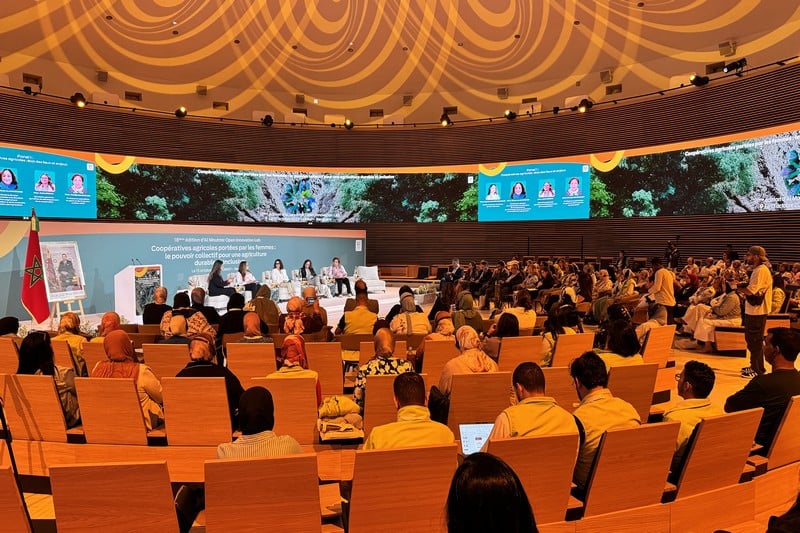
The OCP Group, with Mohammed VI Polytechnic University through its Al Moutmir initiative, held a three-day international gathering in Benguerir from September 15 to 17 on the role of women in transforming agricultural and food systems. The event, held under the theme ‘Where Women Lead, Food Systems Transform,’ marked the UN International Year of Women Farmers 2026 and included a workshop with the Food and Agriculture Organization (FAO) on its roadmap for food security amid climate action.
The gathering brought together women farmers, scientists, entrepreneurs, experts, public officials, international institutions and development organizations, through high-level sessions, master classes, policy discussions and field visits. Organizers described the event as action-oriented, aimed at generating solutions and partnerships that strengthen women’s roles as economic actors, scientists, innovators and leaders in transforming food systems.
Women play an essential role across agricultural and food systems — in production, resource management, processing, marketing and research — yet organizers say their contribution remains constrained by structural barriers: unequal access to financing, land, information, technology and advisory services, compounded by challenges facing agriculture more broadly, including soil degradation and climate change.
The program centered on priority themes including women’s role in agri-food transformation, soil health and climate-resilient value chains, and science and digital tools tailored to women farmers’ needs. Discussions covered gender-sensitive agricultural research, data and artificial intelligence, and gender-integrated advisory models, alongside partnerships aimed at scaling initiatives beyond the pilot stage.
Organizers cited figures underscoring the stakes: per the FAO, closing agricultural productivity and pay gaps between women and men could raise global GDP by nearly $1 trillion and cut food insecurity by 45 million people, while more than 500 million women work in food, land and water systems worldwide, per the CGIAR Flagship Report 2025. The program included two plenary sessions, three master classes, a policy workshop with the FAO, and a field day visiting women-led cooperatives.