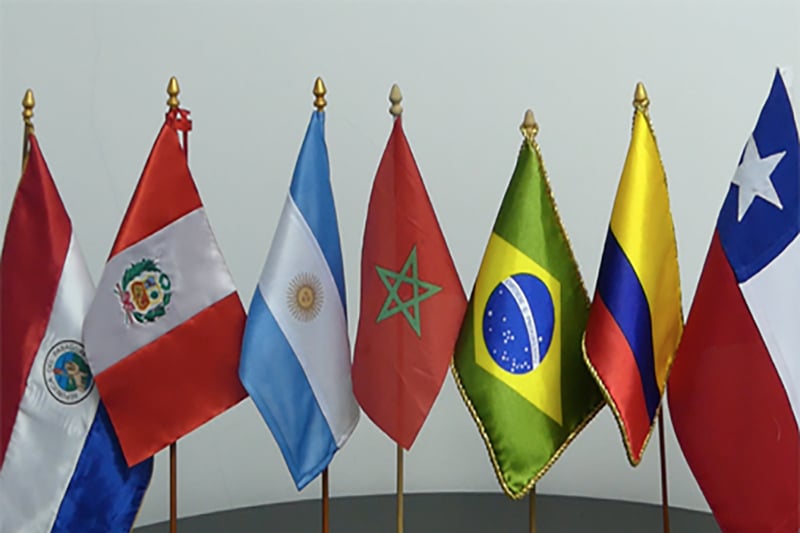
Latin America, long viewed as one of the strongest bastions of political and diplomatic support for the Polisario Front, is undergoing a notable realignment, as Morocco gains ground.
A growing number of countries in the region are distancing themselves from the separatist group and moving closer to Morocco’s position on the Sahara issue.
In recent years, Rabat has secured a series of diplomatic breakthroughs that are redrawing the map of regional positions. Several Latin American states have either suspended recognition of the self-proclaimed “Sahrawi Arab Democratic Republic” (SADR), frozen relations with the Polisario, or explicitly backed Morocco’s sovereignty and its 2007 Autonomy Initiative as the basis for a political settlement.
Colombia is among the most recent examples. The new government first froze ties with the so-called Sahrawi Republic before going further.
It announced support for Morocco’s sovereignty over the Sahara and expressed readiness to deepen cooperation in trade, investment, food security, port infrastructure and transatlantic connectivity.
Peru broke relations with the SADR in September 2023. In July, the office of President-elect Keiko Fujimori confirmed that the Peruvian government remains committed to Morocco’s territorial integrity and sovereignty over its southern provinces.
Ecuador suspended its recognition of the SADR in 2024. The country had recognized the entity in 1983 and allowed the opening of a “embassy” in 2009. The suspension opened a new chapter in bilateral relations with Morocco.
Bolivia followed in February by suspending diplomatic relations with the Polisario and ending all official contacts, while reaffirming support for UN-led efforts toward a realistic, pragmatic and lasting political solution based on compromise.
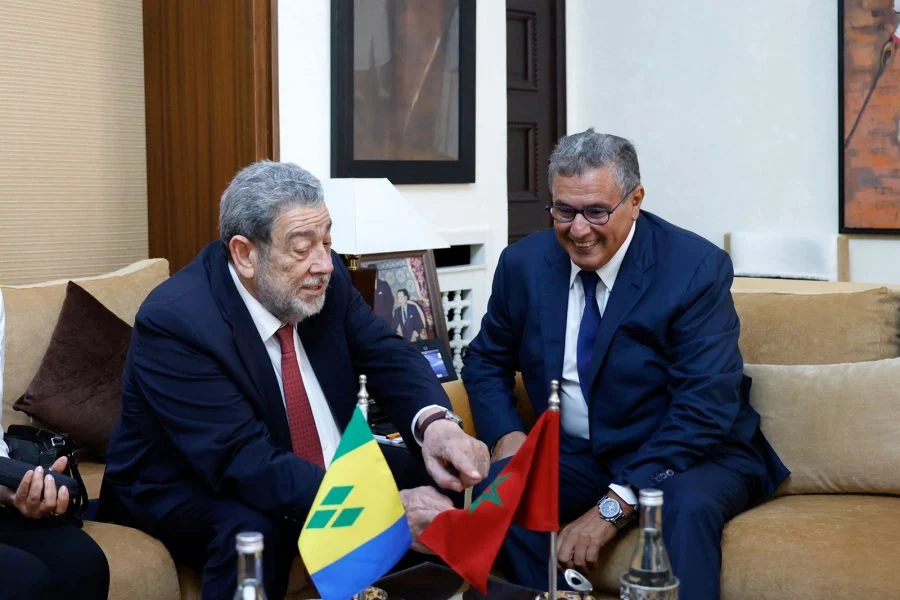
Two months later, Honduras announced the suspension of its recognition of the SADR, describing the move as a sovereign decision grounded in the principles of non-interference and respect for the internal sovereignty of other states.
Tegucigalpa also reiterated its backing for the UN Secretary-General’s efforts and relevant Security Council resolutions.
Chile, which never recognized the Polisario, has drawn closer to Morocco since the March election of President José Antonio Kast. Official negotiations for a free-trade agreement were recently launched. The Polisario has expressed concern that any such deal could include the Sahara, amounting to implicit recognition of Moroccan sovereignty.
In Brazil, official and political discourse has increasingly aligned with support for Morocco’s Autonomy Plan. President Luiz Inácio Lula da Silva’s Workers’ Party has previously stated that the plan is consistent with the principles of dialogue and international law and could improve the well-being of the populations concerned.
Argentina under President Javier Milei has also moved nearer to Moroccan positions, leaving the Polisario with limited room to influence Buenos Aires.
Morocco’s engagement now extends beyond bilateral ties into regional institutions. In 2022 the Polisario warned the Andean Parliament against Moroccan efforts to secure institutional support. Three years later the Parliament held a plenary session in Morocco, during which its president described the Kingdom as a “strategic bridge between Africa, Europe and Latin America.”
The institution expressed support for Morocco’s territorial integrity, and a parliamentary delegation visited Laayoune.
Only a handful of Latin American countries continue to back the Polisario, principally Mexico, Venezuela and Uruguay.
Most others increasingly view Morocco as a gateway to the African continent, leveraging its strategic position on both the Mediterranean and the Atlantic, its economic networks and its expanding presence across Africa.