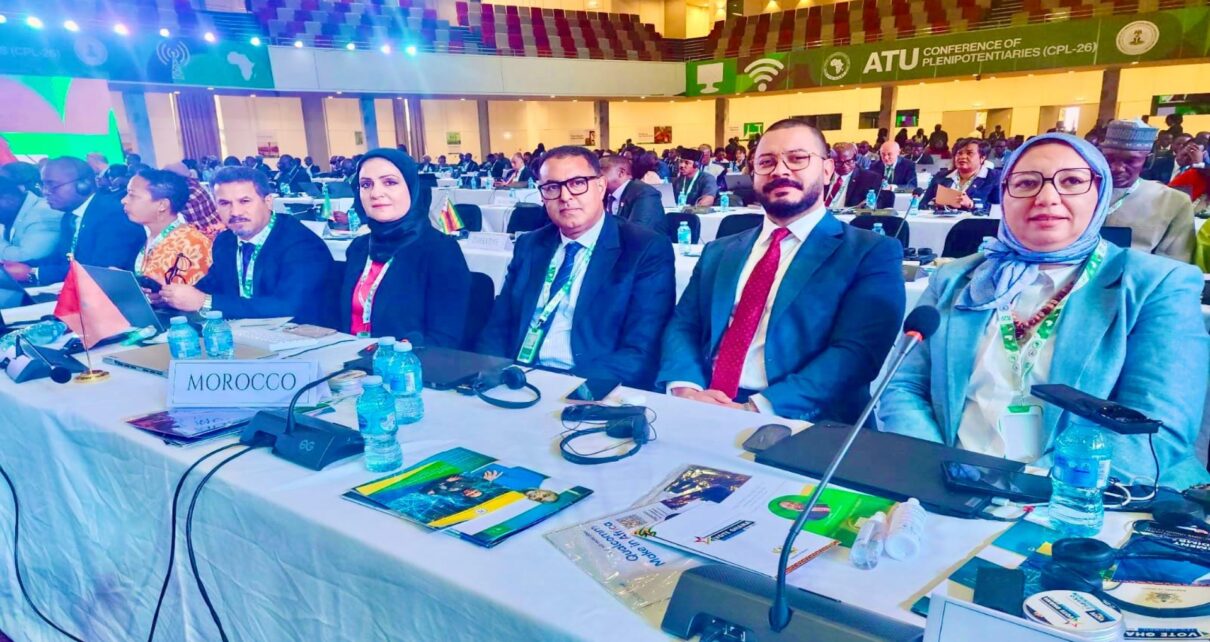
Morocco has been elected as a member of the Administrative Council of the African Telecommunications Union (ATU) for the 2027–2031 term, following the conclusion of the 26th ATU Plenipotentiary Conference (PP-2026).
This election reflects the renewed trust placed by member states in the Kingdom’s contribution to African cooperation based on solidarity, expertise sharing, and co-development, with the aim of building an integrated, resilient, and inclusive African digital space, said the Ministry of Digital Transition and Administration Reform in a press release.
The Kingdom continues its commitment to the digital integration of the African continent and the strengthening of cooperation in the fields of telecommunications, innovation, and artificial intelligence, the press release said.
Morocco took part in the proceedings of the 26th ATU PP-2026 and the preparatory meetings held in Abuja from July 16 to 24 with a high-level delegation including representatives from the Ministry of Digital Transition and Administration Reform, and the National Telecommunications Regulatory Agency (ANRT), the Digital Development Agency (ADD).
In its address at the event, the Moroccan delegation reaffirmed that digital infrastructure, telecommunications, and AI constitute strategic levers for accelerating the continent’s economic and social transformation.
It also highlighted the progress achieved under the Morocco Digital 2030 strategy, the “AI Made in Morocco” roadmap, and the national cybersecurity strategy up to 2030.
The Moroccan delegation presented several initiatives open to all African countries, notably the JAZARI Institutes network, the Digital Hub for Sustainable Development (D4SD), developed in partnership with the United Nations Development Program (UNDP), as well as the Dakhla Digital Igoudar project, designed to strengthen African capacities in cloud computing, AI, data centers, and digital services.
Established in 1977, the African Telecommunications Union is the specialized institution of the African Union responsible for promoting the development of telecommunications and information and communication technologies on the continent.
It works to strengthen cooperation among member states, harmonize sector policies and regulatory frameworks, and promote African positions in international forums, notably within the International Telecommunication Union (ITU).