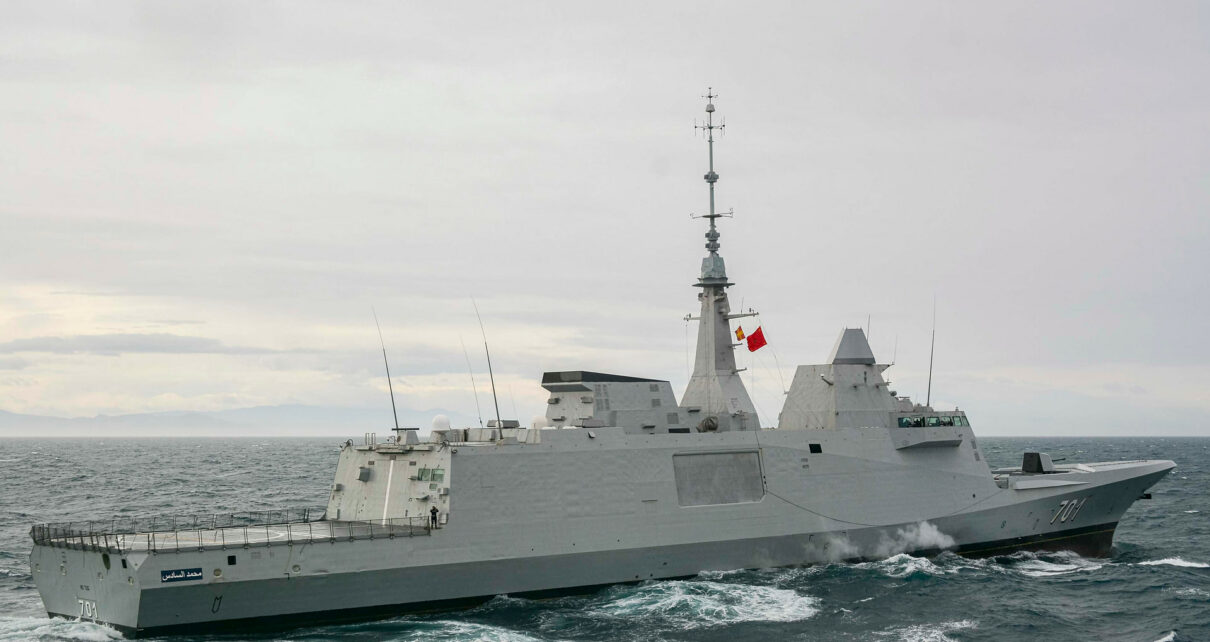
Morocco’s Royal Navy hosted a lavish reception on Monday in New York City aboard Frigate Mohammed VI to mark the vessel’s participation in the International Naval Review 250, organized as part of the celebrations of the 250th anniversary of the independence of the United States.
The ceremony was attended by the U.S. Ambassador to Morocco, Duke Buchan III, and Morocco’s ambassador to Washington, Youssef Amrani, as well as several Moroccan and American civilian and military dignitaries.
Speaking on the occasion, Rear Admiral El Mostafa Tarzi, Commander of the Southern Maritime Sector, stressed that Morocco’s participation in the festivities commemorating the Semiquincentennial reflects the “enduring friendship, mutual trust, and close cooperation that unite our nations.”
In his address, the Rear Admiral recalled that Morocco was the first country to recognize the independence of the United States in 1777, and noted that, ever since, ties between the two nations have continued to strengthen “an exceptional partnership based on mutual respect, shared values, and a common commitment to peace, stability, and international security.”
He emphasized that, at a time when the seas represent both opportunities and responsibilities, the Royal Moroccan Navy and its U.S. counterpart continue to deepen their cooperation, which has become “essential to safeguarding freedom of navigation, enhancing maritime security, and promoting regional and global stability.”
Rear Admiral Tarzi also noted that the Royal Moroccan Navy, guided by the vision of King Mohammed VI, Supreme Commander and Chief of General Staff of the Royal Armed Forces, continues to modernize its capabilities while strengthening its partnerships with allied and friendly navies around the world.
For his part, Ambassador Duke Buchan III recalled that before the U.S. Navy had constructed a single frigate, Sultan Sidi Mohammed Ben Abdellah opened Moroccan ports to American ships in 1777. “That was not a small gesture,” but “a lifeline, if you will, to a young republic finding its footing in the world,” the diplomat said.
The two countries “are rising together at the moment,” he added, describing the participation of the frigate Mohammed VI in the U.S. 250th anniversary celebrations as “a reminder of our shared history and friendship.”
The U.S. Ambassador also hailed the U.S.-Morocco security partnership, which is “as strong as it’s ever been,” and recalled that the Kingdom participates in “more than 100 U.S.-organized military engagements every year.”
He recalled that President Donald Trump “stands firmly with Morocco,” including his unwavering support for Morocco’s autonomy initiative as “the only basis for a just and lasting solution in the Moroccan Sahara.”
For his part, Ambassador Amrani welcomed U.S. support for Morocco’s sovereignty over its Southern Provinces, as well as Washington’s backing of the political process and the Moroccan Autonomy Initiative as the only solution to the artificial dispute over the Moroccan Sahara.
Amrani said that the participation of the Royal Moroccan Navy in this historic event “powerfully embodies one of the oldest, strongest, and most enduring strategic partnerships in American history.”
“Our history is remarkable,” he stressed, and “what makes this partnership truly exceptional is not only where it comes from, but also where it is heading.”
On the occasion, the commanding officer of the frigate Mohammed VI presented U.S. Rear Admiral Bradley Andros with a painting depicting the Moroccan frigate anchored off the coast of New York, against the backdrop of the iconic skyline of the Big Apple.
Frigate Mohammed VI arrived in New York early July after completing a transatlantic crossing to participate in major maritime events linked to the United States’ 250th anniversary commemorations. The frigate, the flagship of the Royal Moroccan Navy, is expected to take part in multinational naval activities and ceremonial events bringing together warships from several countries for the US semiquincentennial celebrations.