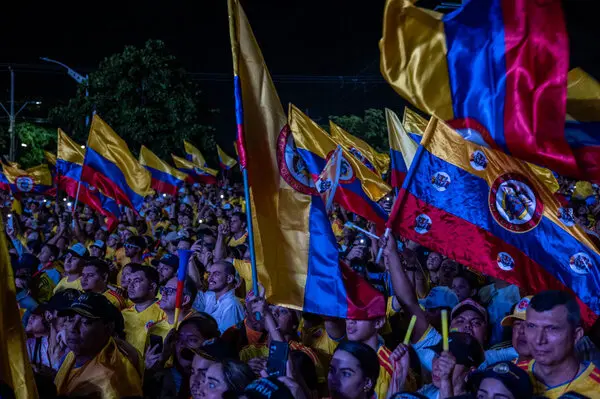
A subtle but significant shift is reshaping Latin America’s foreign policy regarding Morocco’s territorial integrity or the Sahara issue. As part of that momentum, the recent election of a new president in Colombia.
The election underscores a broader transition marking the gradual retreat of ideological diplomacy and the rise of pragmatism and realism.
For decades, parts of Latin America served as a diplomatic stronghold for positions aligned with Algeria’s dogmas at the heart of which secured backing for its Polisario proxy militias.
Largely grounded in ideological solidarity dating back to the Cold War and post‑colonial movements, the far left across Latin America framed the Sahara issue in a way that bolsters Algeria and the Polisario’s rhetoric, rather than focusing on historical legitimacy and facts on the ground.
The recent elections in Colombia, however, confirm the departure of a leftist leadership that signaled sympathy toward Polisario narratives, and the arrival of a more focused leadership with a policy anchored in national interest which has more to win diplomatically and economically in backing Morocco’s territorial integrity.
Across Latin America, governments face mounting economic pressures, shifting global alliances, and growing demands for investment and stability. As a result, foreign policy is increasingly shaped by practical considerations including trade, security cooperation, and strategic partnerships.
In this context, symbolic positions inherited from earlier ideological frameworks carry less weight. The Sahara issue is increasingly viewed through the lens of stability and feasibility as well as practical solutions instead of ideological anachronism dear to Algeria.
In recent years, Rabat has repositioned itself as a regional hub linking Africa, Europe, and the Atlantic space, emphasizing economic integration, infrastructure connectivity, and South‑South cooperation.
Rather than relying solely on political arguments, Morocco has embedded its foreign policy in tangible partnerships. That approach resonates strongly with Latin America’s emerging pragmatism.