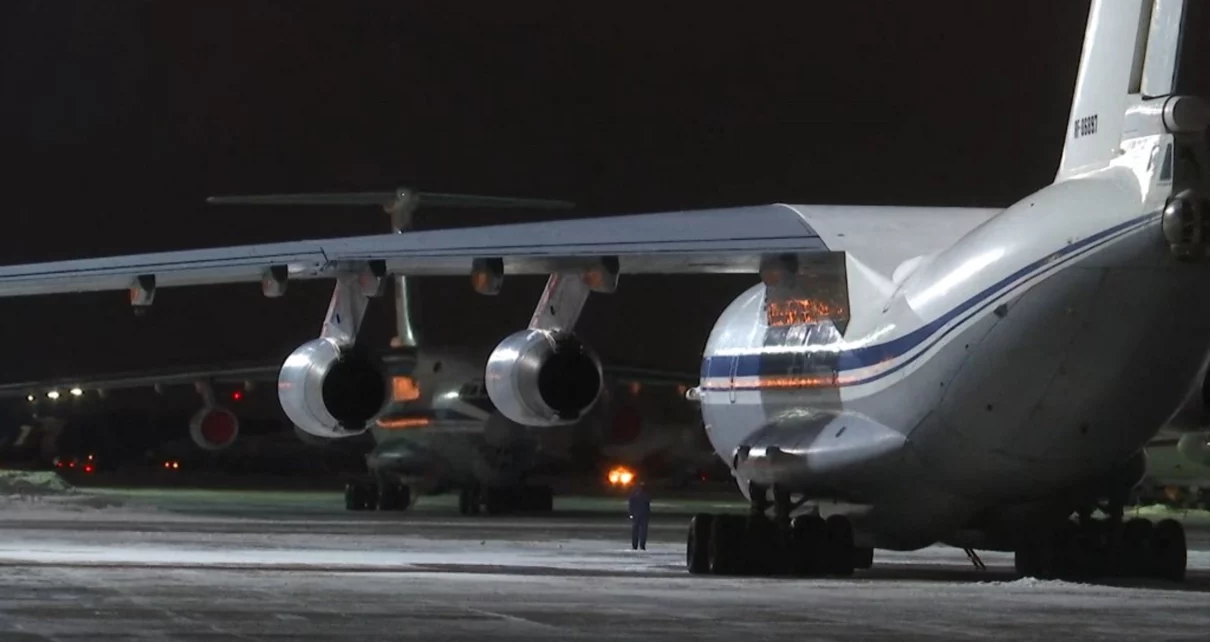
A fleet of cargo aircraft linked to the Russian military conducted more than 160 flights to Algeria over the past year, likely delivering advanced fighter jets and reinforcing the North African country’s role as a logistics hub for Moscow’s operations in Africa, according to an investigation cited by Defense News.
The probe, also cited by Kyiv Post and Le Parisien Identified at least 167 cargo flights between Russia and Algeria from March 2025 to April 2026, highlighting Algeria as one of the main nodes in Moscow’s global freight network.
The developments are likely to deepen tensions between Algiers and Western governments already wary of Algeria’s close defense ties with Moscow.
The reported scale of Russian cargo activity, combined with alleged efforts to circumvent sanctions and support operations across Africa, reinforces concerns in Europe and the United States that Algeria is increasingly serving as an enabler of Russian strategic interests in Africa at a time of heightened geopolitical rivalry following the Ukraine war.
This perception risks complicating Algeria’s relations with Western partners, particularly on security cooperation and energy ties, as scrutiny grows over its role in facilitating Russia’s military reach beyond its borders.
Many flights departed from airfields linked to United Aircraft Corporation, Russia’s state-owned warplane manufacturer, and landed at Algerian air bases. Some coincided with sightings of newly delivered Russian-made fighter jets over Algerian territory.
Defense News reported that Algeria has received multiple types of combat aircraft, including Su-35 fighters and the fifth-generation Su-57 stealth jet. The surge in air traffic aligns with rising Algerian military spending.
According to the Stockholm International Peace Research Institute (SIPRI), Algeria’s defense budget rose by 11% in 2025 to $25.4 billion, among the highest shares of GDP globally.
The investigation, titled “Parallel Airlifts,” describes how Russia has built a covert transport network using shell companies, aging Soviet-era cargo planes and little-known airlines to circumvent Western sanctions. Flight tracking data revealed repeated routes linking Russia to Algerian bases, including Oum El Bouaghi, Ain Oussera, Annaba, Laghouat and Béchar.
Some flights reportedly disappeared from ADS-B tracking systems, suggesting the deliberate deactivation of transponders or falsified flight plans. Algiers emerged as a central hub for these operations.
Beyond being a destination, Algeria appears to serve as a transit platform for Russian military support into Africa. Flights frequently stopped at Mineralnye Vody in southern Russia before continuing to Algeria and, in some cases, onward to sub-Saharan destinations.
Guinea is described as a strategic partner in West Africa, while Niger hosts Russian paramilitary elements and significant resource interests. Data cited in the report suggests that a Volga-Dnepr Antonov An-124 conducted multiple rotations between Algeria and sub-Saharan Africa in late April, likely heading to Niamey.
The air bridge may also support Russian paramilitary groups, including the Africa Corps, successor to the Wagner Group. Analysts say Algeria’s geographic position makes it a convenient and less scrutinized rear base for operations in West Africa.