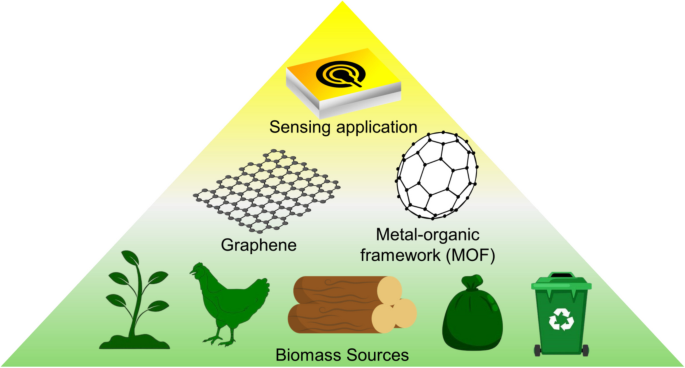
Researchers at Mohammed VI Polytechnic University’s College of Chemical Sciences and Engineering have published a significant review in Green Chemistry — one of the British Royal Society of Chemistry’s flagship journals — examining a method for converting lignin, a renewable biomass component, directly into laser-induced graphene (LIG). The research positions Morocco at the frontier of a globally competitive field: the development of sustainable carbon materials that bypass the fossil-fuel-derived precursors and energy-intensive processes that dominate current graphene production, commented the publication as reported by the news outlet moroccoworldnews.
Lignin, the structural polymer that gives plant cell walls their rigidity, is produced in enormous quantities as a byproduct of the paper and pulp industry and is largely underutilised. The UM6P team’s review demonstrates that, under precisely controlled laser parameters, lignin can be converted into porous, electrically conductive graphene structures under ambient conditions, without solvents or chemical catalysts. The process is direct, scalable and leaves a significantly smaller carbon footprint than conventional graphene synthesis routes.
The practical implications of this work span several industries. Lignin-derived laser-induced graphene has demonstrated strong performance in electrochemical energy storage — relevant to batteries and supercapacitors — biosensing applications and environmental remediation interfaces. In each case, the UM6P review shows that the biomass-derived material compares favourably with synthetic alternatives on both performance metrics and environmental cost, while offering the additional advantage of being derived from widely available agricultural or industrial waste streams.
For Morocco, the strategic resonance of this research is considerable. The country is the world’s largest phosphate exporter and is investing heavily in building downstream chemical value chains. An ability to position Moroccan institutions — and potentially Moroccan industry — at the cutting edge of advanced materials science derived from agricultural biomass aligns with the OCP Foundation’s rationale for establishing UM6P itself: to translate natural resource advantage into intellectual capital and industrial capability.
The publication adds to a growing body of internationally recognised scientific output from UM6P’s materials science cluster, which has over recent years attracted Fulbright researchers, formed partnerships with institutions including MIT and Paris Cité University, and hosted the Nobel Prize-winning chemist Omar Yaghi at its 2026 Science Week. Morocco’s emergence as an African research hub is increasingly backed by peer-reviewed evidence, not just institutional rhetoric.