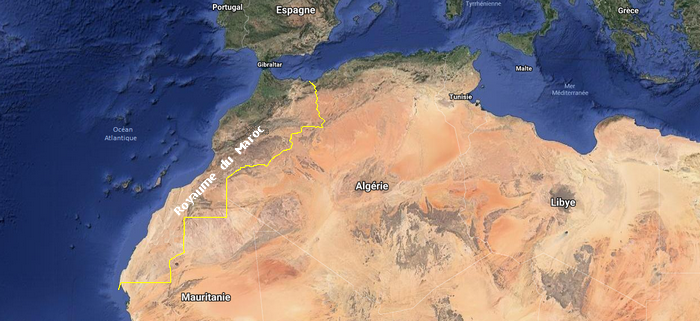
Mali’s decision to withdraw its recognition of the self-declared separatist entity SADR and to support autonomy under Moroccan sovereignty in the Sahara under represents a major diplomatic development in the Sahel, carrying regional, historical and geopolitical significance.
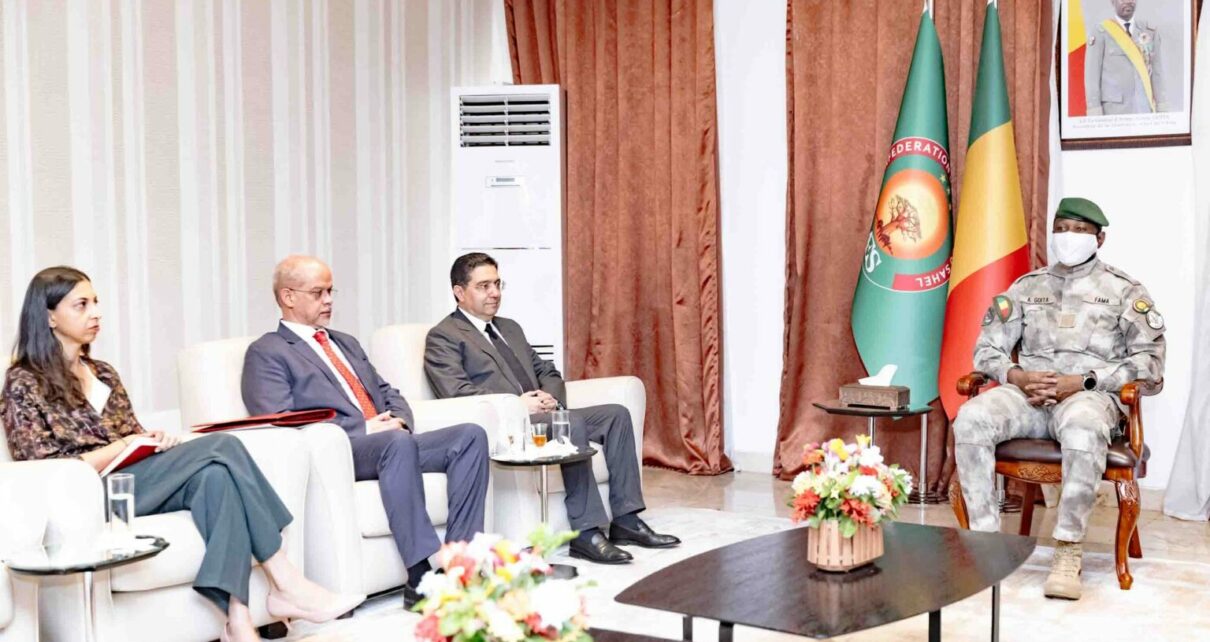
The announcement was made on April 10 by Malian Foreign Minister Abdoulaye Diop during an official visit by his Moroccan counterpart, Nasser Bourita, to Bamako.
With this move, Mali completes the alignment of its Sahel alliance (AES), Burkina Faso, in favour of Morocco’s territorial integrity.
Malian authorities stated that the decision was taken in conformity with international legality, notably United Nations Security Council resolutions that identify autonomy under Moroccan sovereignty as the basis for a political solution.
Mali also indicated it would formally notify international and regional organisations of its withdrawal of recognition of the SADR, as well as inform diplomatic missions accredited in Bamako.
A Broader International and Regional Shift
Mali’s decision is part of a pro-Moroccan momentum that saw over recent years dozens of countries withdraw recognition of the SADR.
Meanwhile, major international powers, including the United States and France, have straightforwardly backed Morocco’s sovereignty over the territory while former colonial power together with most of the EU in addition to the UK consider the autonomy plan as the most feasible solution.
Mali’s ally Russia has a fisheries deal with Morocco covering the Sahara waters.
At least 28 countries have reinforced this position by opening consulates in Laayoune and Dakhla, Morocco’s two main cities in the Sahara, and by committing economic investments in the region.
Within this context, Mali’s move is seen as strengthening Morocco’s diplomatic momentum in Africa while reinforcing cohesion within the AES at a time of strained relations between Sahelian states and Algeria.
Deep pre-colonial and religious ties
Beyond current diplomacy, Mali’s new found relationship with Morocco reflect long‑standing historical ties between the two countries. Bilateral relations date back to pre‑colonial times, when trans‑Saharan trade routes connected Marrakech, Sijilmassa and Timbuktu, facilitating the movement of gold, salt, scholars and religious teachings.
There was a time when Timbuktu, Mali’s historical depth, pledged allegiance to Moroccan kings.
These exchanges fostered enduring religious links, particularly through Islamic scholarship and Sufi traditions. Moroccan religious influence played a key role in the development of Islamic learning in Mali’s historic centres, leaving a legacy that continues to shape bilateral relations today.
Economic Presence in Mali
Morocco has also built a significant economic presence in Mali. Moroccan banks operate widely in the Malian financial sector, while Moroccan firms are active in construction, telecommunications, insurance, fertilisers and infrastructure development.
Ties were cemented by a Royal visit by King Mohammed VI to Mali in 2014, which resulted in multiple cooperation agreements covering economic development, religious training, security and education, consolidating a strategic partnership between Rabat and Bamako.
Mali’s stance on the Sahara also aligns with its support for Morocco’s Atlantic Initiative, which aims to provide landlocked Sahelian countries with access to Atlantic trade routes through Moroccan ports and logistics corridors. Malian officials view the initiative as offering practical economic benefits and helping reduce Mali’s isolation following disruptions to traditional trade routes.
For Morocco, Mali’s support is being presented as a major diplomatic success, reinforcing the international trend towards recognition of Moroccan sovereignty over the Sahara and underlining Rabat’s growing influence in the Sahel region.