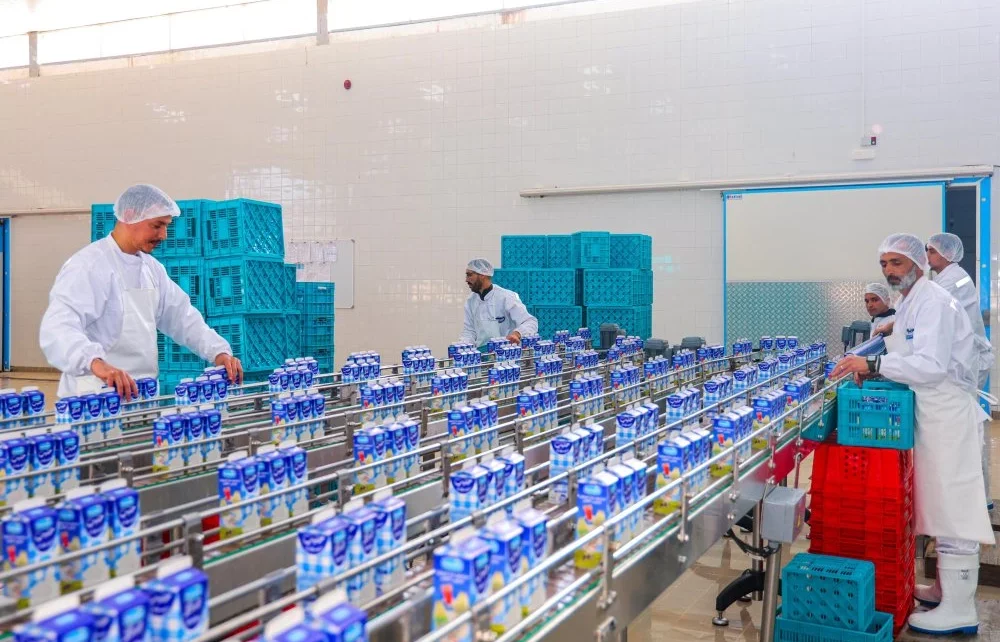
Morocco’s milk production sector has been strengthened with the recent opening of a new plant in Kenitra by the agricultural cooperative EXTRALAIT. The $10.8 million unit, which produces pasteurized milk, comes to enhance the dairy supply chain, which plays a central role in national food security.
EXTRALAIT is a major dairy cooperative founded in 1953, specializing in the production of pasteurized milk, yogurt, and butter. Located in Kénitra, it works with nearly 12,000 small-scale breeders across 44 cooperatives and 57 milk collection centers.
In 2025, the cooperative reported a turnover of over $ 51 million. Moroccan ministry of Industry and Trade supports it as a model for national food security and rural economic development.
Morocco’s dairy sector is a vital agricultural pillar, involving around 260,000 farmers, 90% of whom manage fewer than five cows. The industry produces between 2 and 2.5 billion liters of milk annually, supported by 1.2 million dairy cattle.
Dairying contributes positively to human wellbeing in a variety of different ways: nutrition through quality food products, income and employment, organic fertilizer as well as assets and savings.
According to UN Food Agency, the global dairy sector has seen, during the last five decades, substantive changes with major intensification, scaling-up and efficiency of production driven by demand from a growing human population and disposal incomes. This growth was achieved through the development in animal breeding, nutrition, feed efficiency, animal health, housing and automation.