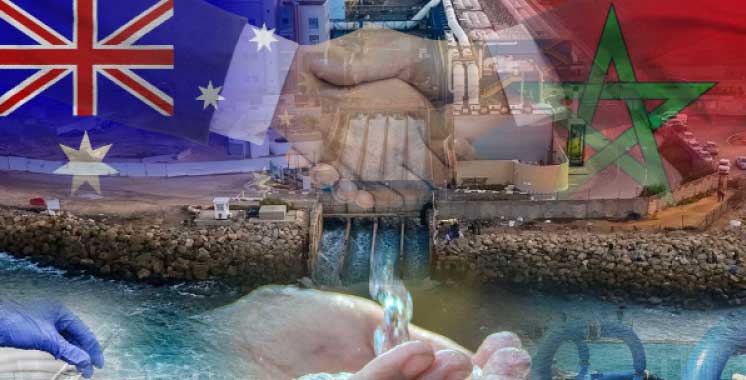
Australia is actively positioning itself as a partner of choice in Morocco’s ambitious national desalination program, as the Kingdom’s water strategy continues to attract growing international interest. Australian Ambassador Damien Donavan recently visited the Ministry of Equipment and Water in Rabat for talks focused on bilateral cooperation prospects, signaling Canberra’s intent to translate diplomatic ties into concrete commercial and technical engagement.
Discussions covered Morocco’s priority projects in water resource management and irrigation, alongside avenues for strengthening scientific and technical cooperation between the two countries — which mark the fiftieth anniversary of their diplomatic relations in 2026. Moroccan officials highlighted specific areas where Australian expertise could add value, including groundwater management, water efficiency improvements, pipeline network optimization, and the development of meteorological and early warning systems. The ambassador announced that a delegation of Australian companies interested in water and irrigation projects would shortly visit Morocco to engage directly with relevant ministries.
The international attention is well-founded. Morocco aims to raise the share of desalinated water in its drinking water supply from 25% today to 60% by 2030, with total production targeted at 1.7 billion cubic meters annually. The country currently operates 17 desalination stations with a combined capacity of 345 million cubic meters per year, with four additional units set to push that figure to 540 million cubic meters by 2027 — all powered by renewable energy.
The flagship project under development is Africa’s largest desalination plant, located in Lamharza Essahel in the El Jadida province. With a planned annual capacity of 300 million cubic meters and a projected beneficiary population of 7.5 million, the facility will serve Greater Casablanca and surrounding cities. Its first phase — costing 6.5 billion dirhams through a public-private partnership — is scheduled for commissioning by end-2026, with a second phase extending capacity to 822,000 cubic meters per day by mid-2028.
The UN Special Envoy for Water, Retno Marsudi, praised Morocco’s model at the 19th World Water Congress in late 2025, describing it as a valuable example for water-stressed nations worldwide.