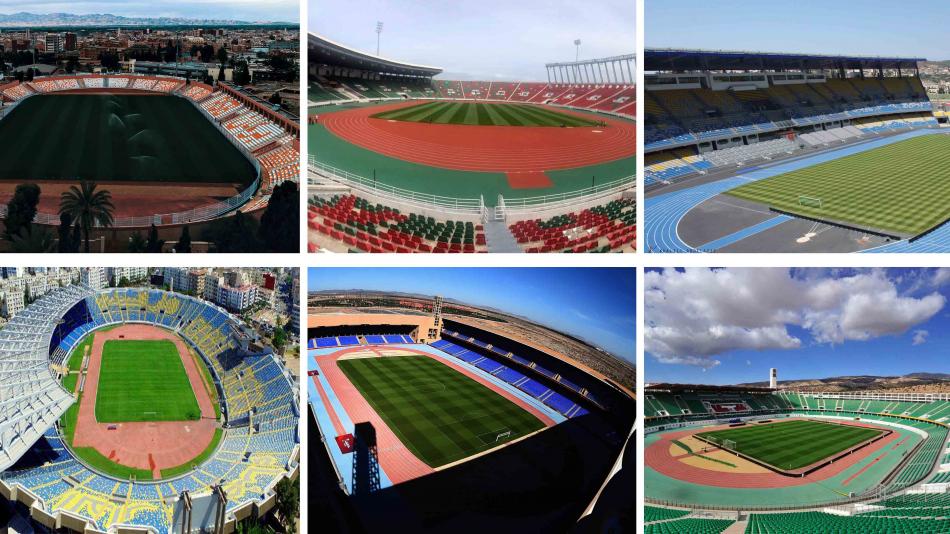
Morocco has established five dedicated joint-stock companies to oversee the management, development, and commercial operation of its major sports infrastructure across the country’s key urban regions, as the kingdom accelerates preparations for co-hosting the FIFA World Cup in 2030.
Formalized through five decrees published in Official Gazette No. 7486 on February 26, 2026, the new entities are TangerRegionSport SA, CasaRegionSport SA, FesRegionSport SA, MarrakechRegionSport SA, and AgadirRegionSport SA. Each company was legally constituted upon publication and is immediately authorized to begin operations.
Each entity carries a share capital of 20 million dirhams, distributed through an identical ownership structure across all five companies. The central government, represented by the Ministry of Economy and Finance, holds a majority stake of 50 percent. The relevant regional council contributes 22.5 percent, the Royal Moroccan Football Federation holds 17.5 percent, and the host municipality accounts for the remaining 10 percent. The structure is designed to bring all key stakeholders into a single governance framework while preserving state oversight over strategic decisions.
The mandate of these companies extends well beyond stadium maintenance. They are charged with managing, operating, and upgrading all sports infrastructure within their respective regions — particularly facilities earmarked for the 2030 World Cup — while ensuring compliance with international standards on quality, safety, and sustainability. They are also empowered to generate commercial revenue through advertising space, digital ticketing, event organization, venue rental, and catering operations, providing the financial base to sustain long-term investment in facilities.
FIFA’s requirements for the 2030 tournament have acted as a decisive accelerator, demanding a qualitative leap in how Morocco manages its sports assets. The choice of the joint-stock company model is deliberate — it provides a more agile and financially innovative framework than traditional public administration, allowing these entities to eventually open their capital to private investors or issue bonds to fund infrastructure expansion.
The five cities — Tangier, Casablanca, Fès, Marrakech, and Agadir — were selected for their concentration of existing sports infrastructure and their broader economic and tourism appeal. But organizers are clear that the ambition extends beyond 2030: the model is designed to embed a permanent culture of professional, transparent, and commercially viable sports facility management in Morocco — one that could ultimately serve as a template for managing other categories of public infrastructure nationwide.