Morocco has reaffirmed its commitment to strengthening nuclear and radiological safety capacities across the developing world, using a high-level address at the International Atomic Energy Agency’s Board of Governors to position the kingdom as an active contributor to global nuclear safety standards.
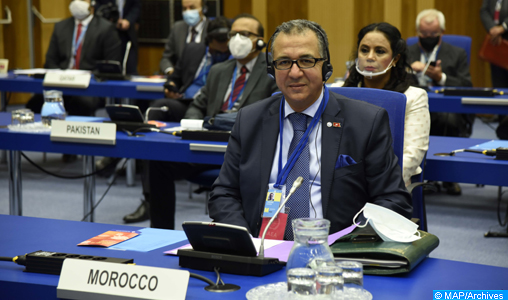
Ambassador Azzeddine Farhane, Morocco’s Permanent Representative to international organizations in Vienna, delivered the statement during the Board’s session running from March 2 to 6, as delegates addressed the agenda item on nuclear and radiological safety. Farhane welcomed IAEA Director General Rafael Mariano Grossi’s report, which he noted specifically highlights Morocco’s alignment with international nuclear safety norms and outlines the Agency’s global priorities for 2026.
The diplomat praised the IAEA’s sustained efforts to maintain and strengthen safety frameworks across nuclear, radiological, transport, and waste management domains, as well as emergency preparedness and response capabilities — with particular attention to regions where needs are most acute.
Farhane outlined the concrete steps Morocco has taken to modernize its own regulatory framework, describing a comprehensive overhaul of national regulatory texts to bring them into full conformity with IAEA safety standards. The kingdom has voluntarily hosted two IAEA peer review missions, the results of which have been notably positive. The Emergency Preparedness and Response Review mission commended the robustness of Morocco’s national emergency system and identified several practices exceeding the Agency’s own benchmarks. The Integrated Regulatory Review Service mission similarly recognized Morocco’s effective establishment of a new, coherent legal and regulatory framework for nuclear and radiological safety.
Building on these results, Morocco signaled its readiness to share its experience with other IAEA member states — particularly African countries seeking to strengthen their own national safety systems — and reaffirmed its commitment to working with regional and international partners toward a stronger global nuclear safety regime.