Africa faces mounting conflict risks in 2026 amid spreading wars, weakened regional institutions and a rapidly shifting global order, the International Crisis Group (ICG) said in a new briefing that urges urgent diplomacy to prevent further deterioration.
The report, Seven Peace and Security Priorities for Africa in 2026, warns that the continent is beset by trouble at home while traditional mechanisms for resolving conflicts, including the African Union (AU), struggle to respond to multiple crises.
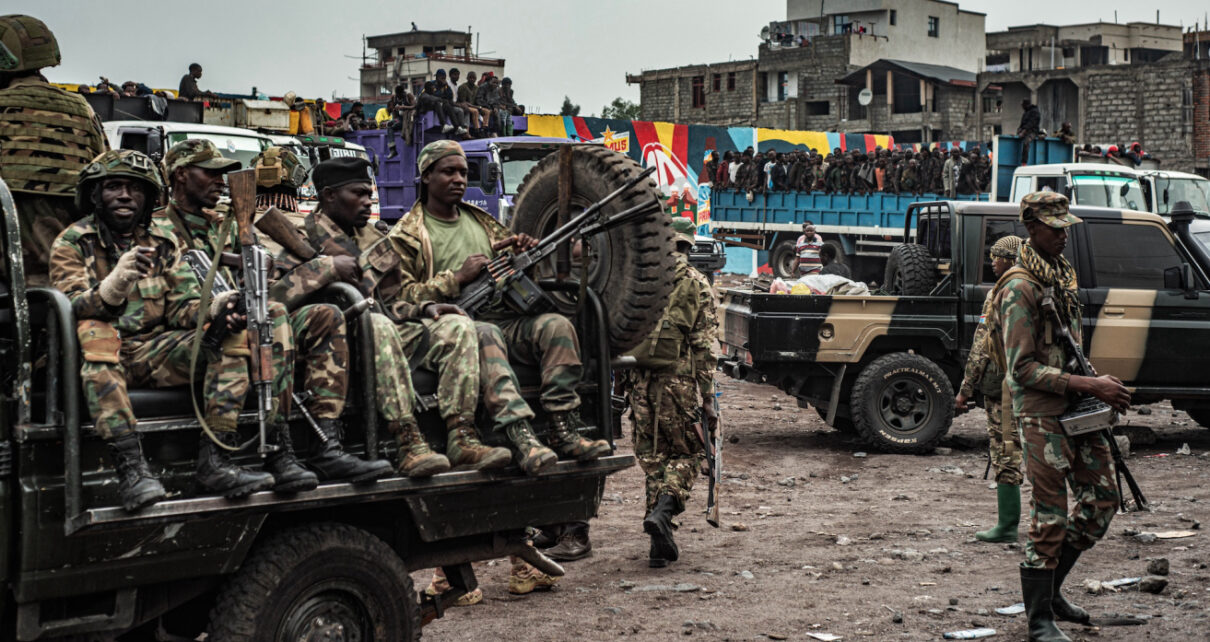
Large parts of the continent remain engulfed in violence, with wars in Sudan, the eastern Democratic Republic of Congo and the Sahel killing tens of thousands and displacing millions in 2025, the ICG said.
It warned that the coming year “could see yet more trouble, including interstate conflict,” as long-running crises spill across borders and new confrontations emerge amid economic pressures, population displacement and political instability.
The report highlights what it calls a “deep malaise” within the AU, whose peace and security structures once anchored continent-wide responses to crises.
Despite its broad membership and established norms against coups and border changes, the AU “is no longer able to intervene substantively” in many of today’s conflicts, Crisis Group said.
According to the briefing, seven conflict arenas demand urgent attention in 2026: the fraught relationship between Burundi and Rwanda, escalating tensions in Cameroon, unresolved hostilities between Ethiopia and Eritrea, the protracted insurgency in the Sahel, Somalia’s continued fight against al-Shabaab, renewed violence in South Sudan, and the devastating civil war in Sudan. These theatres, ICG said, represent the most immediate flashpoints where intensified diplomacy could prevent wider catastrophe.
The report also situates Africa’s crises within a global landscape marked by weakening multilateral norms. It says the “unravelling of the UN-centred multilateral system” has left African states more exposed, as major powers increasingly disregard international rules meant to prevent aggression and protect civilians. With the global order “turned on its head,” African governments face fewer diplomatic tools and greater uncertainty. [kas.de]
Crisis Group argues that conflict mediation should adopt a pragmatic, context-dependent approach. In some cases, coalitions of African states may be best positioned to lead negotiations, while in others, external actors – including the United States and Gulf states -should take on a more active role.
The briefing notes that Gulf powers increasingly play “dual roles” as both supporters of belligerents and potential mediators, influencing conflict dynamics across the continent.
While the report acknowledges Africa’s long-standing challenges, it underscores that the human toll has reached a critical point. Without immediate action to de-escalate conflicts, protect civilians and reinvigorate diplomacy, the organization warns that millions more could be driven from their homes and regional instability could deepen.
Crisis Group concludes that 2026 will be a pivotal year for the continent, calling on African leaders and international partners to prioritize preventive diplomacy and targeted engagement in the seven highlighted crisis zones. The briefing emphasizes that despite institutional fatigue and geopolitical headwinds, early intervention could still avert larger-scale calamity.