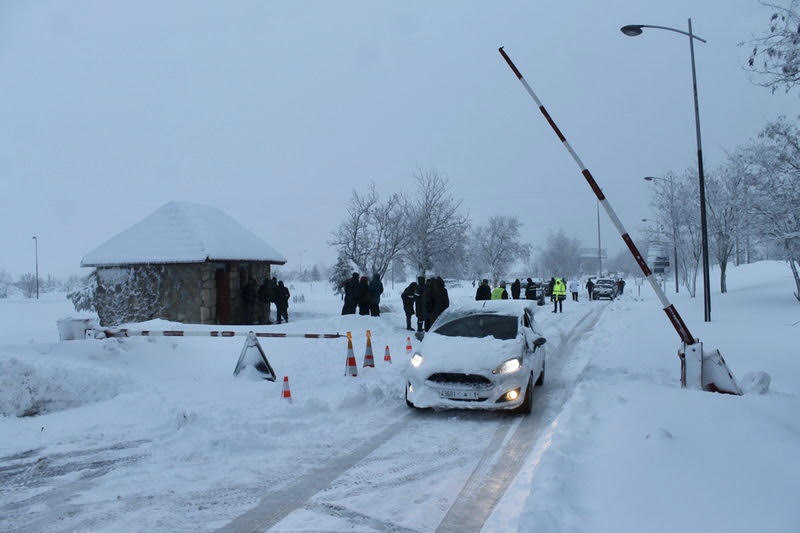
Morocco is experiencing a beneficial winter episode marked by generous rainfall, abundant snow on mountain peaks, and cooler temperatures following several seasons of water deficit. The country’s General Directorate of Meteorology (DGM) attributes this unusual weather pattern to a major shift in pressure distribution over the North Atlantic.
Typically, weather depressions follow northern trajectories across the Atlantic. However, powerful and stable anticyclones positioned near the North Pole have blocked these usual currents, pushing Atlantic depressions southward and placing Morocco and the western Mediterranean directly in their path. The thermal contrast between polar air from North America and warm tropical air has intensified the Jet Stream, an upper-atmosphere current that transports massive quantities of water vapor in the form of atmospheric rivers.
This moisture, carried over long distances, creates a substantial water vapor reservoir. When it interacts with low-pressure systems, cold air at altitude, and Morocco’s mountainous terrain including the Rif and Atlas ranges, it generates widespread and prolonged precipitation and snowfall across extensive areas.
Mountain regions have witnessed the episode’s full impact within just a few days. At the summit of Jbel Tidghine in the Rif, snow accumulation exceeded 2.5 meters. Jbel Hayane recorded over 1.2 meters, while certain localities in Midelt province, particularly Anemzi, saw similar accumulations. Near Ifrane, Michlifen registered approximately 70 centimeters of snow depth.
These accumulations represent a precious water resource reserve. Snow stored on mountain peaks will gradually feed rivers and underground aquifers during the melt season, contributing to dam replenishment and groundwater recharge after several deficit years.
The episode reflects an unusual weather regime characterized by repeated arrivals of humid air flows combined with cold air presence, maintaining sustained instability. Rainy periods follow one another, temperatures remain low, and winds sometimes blow vigorously. While these conditions require caution regarding rapid weather variations, they remain generally favorable for the country’s water resources, the DGM concluded.