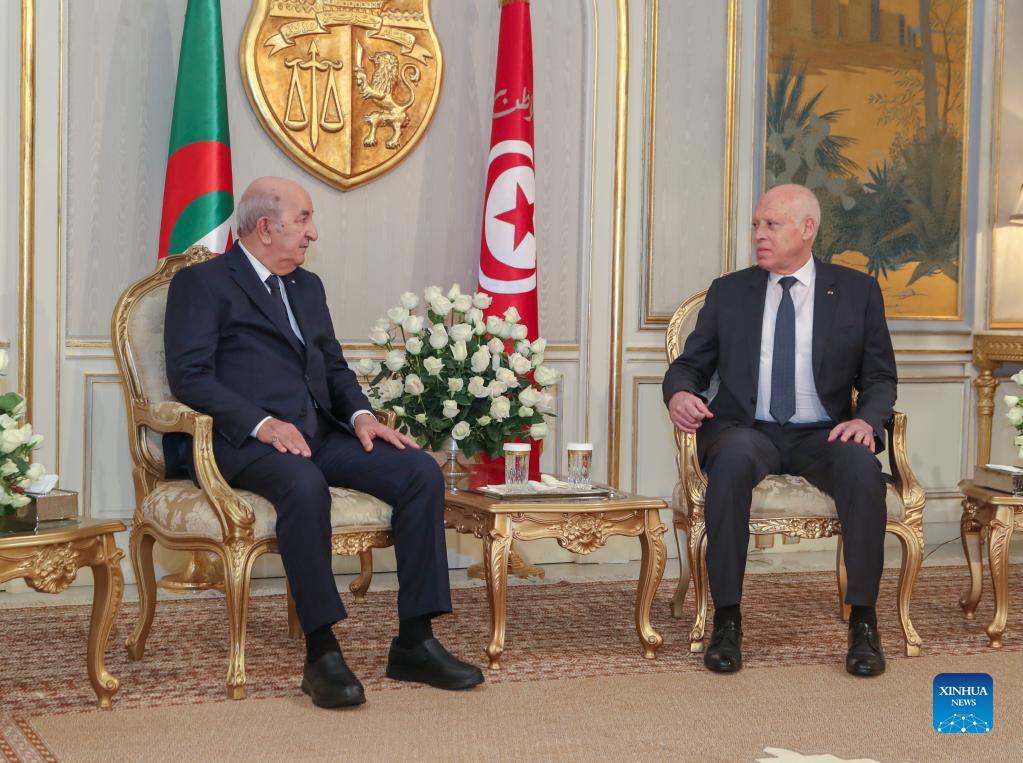
Algeria has fostered its grip on impoverished Tunisia, worsening the dependence of its fragile neighbor on gas rent in a bilateral relationship that constrained Tunisia’s diplomacy, a recent Chatham House op-ed showed.
Tunisia’s recent trajectory marks a profound shift in Maghreb geopolitics, Safae El Yaacoubi wrote in the Op-ed, adding that “power in the region is no longer exercised through formal alliances or ideological blocs, but through economic lifelines, diplomatic shielding, and calibrated isolation.”
She stresses that Tunisia is compelled to “a form of vassalization” wherein “Algeria leverages Tunisia’s vulnerability to cement a gatekeeping role.”
When President Kais Saied consolidated power in July 2021, Tunisia’s rupture with Western partners left it exposed.
Algeria stepped in as benefactor: $150 million in 2020, $300 million in 2021, another $300 million in 2022, and energy lifelines that now power nearly all Tunisian electricity. By mid-2023, 47% of Tunisia’s gas came from Algeria.
“This dependency is structural,” notes El Yaacoubi, “granting Algiers leverage it rarely needs to flaunt.”
Beyond official flows, Algeria controls informal trade, notably subsidized goods and fuel sustaining Tunisia’s border regions.
When tensions flared after the Bouraoui affair, Algerian customs froze hundreds of Tunisian trucks, lifting restrictions only after Tebboune’s televised order. “The message was unmistakable: Tunis moves when Algiers nods,” El Yaacoubi said.
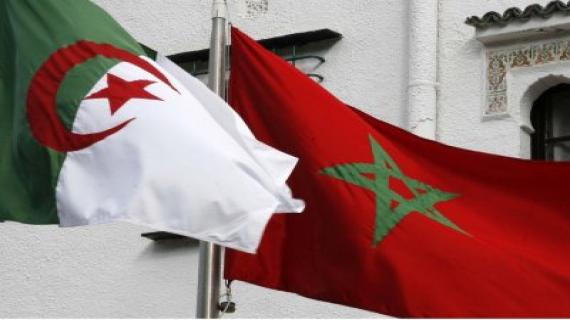
Diplomatically, Tunisia has abandoned neutrality to bandwagon with Algiers. It abstained on a UN vote on Western Sahara in 2021 and hosted Polisario leader Brahim Ghali in 2022, rupturing ties with Morocco.
The Bouraoui episode deepened the asymmetry whenTunisia dismissed its foreign minister rather than assert sovereignty, signaling pre-emptive compliance. Even when Algerian pundits mocked Tunisia as a “wilaya,” Tunis stayed silent, El Yaacoubi recalled.
“This silence reflects a shift from independence to deference,” says El Yaacoubi.
Algeria now casts itself as Tunisia’s guarantor of stability, boasting of coordination with Rome and offering unsolicited advice on “returning to democracy.” Meanwhile, Tunisia’s legal trajectory mirrors Algeria’s model of vague conspiracy charges, exceptional courts, and informal security cooperation that blurs borders.
“It’s not just authoritarian drift,” argues El Yaacoubi, “it’s a hybrid model shaped by Algeria’s post-Hirak playbook.”