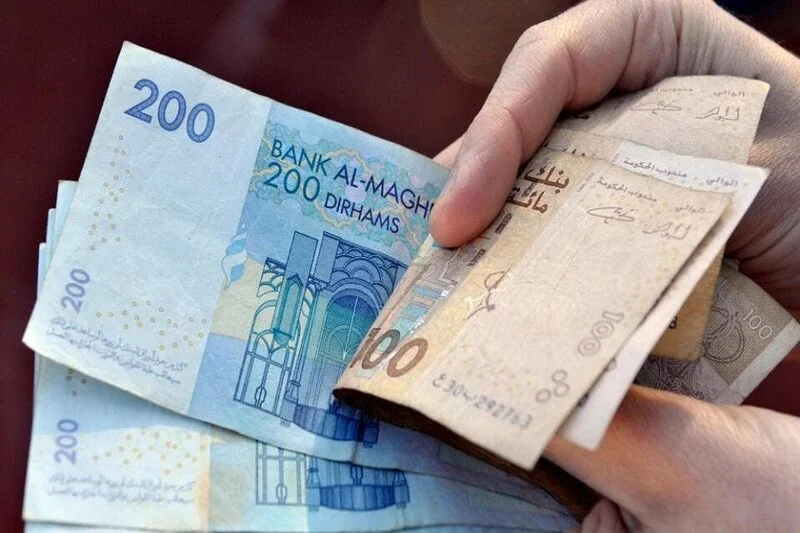
Morocco’s dirham has maintained remarkable stability over the past decade while currencies of competitors Turkey and Egypt collapsed, creating apparent price advantages for those nations’ exports. However, exchange rate dynamics reveal far more complexity than nominal depreciation suggests, notes Media 24 news outlet in an analysis.
Over 2015-2024, the dirham depreciated just 0.7% against the euro while appreciating 6.9% versus the dollar. Given the dirham’s peg to a currency basket weighing 60% euro and 40% dollar, overall nominal evolution registers only 2.34% appreciation—representing notable stability amid volatile emerging market currencies.
During this period, Turkey’s lira lost over 83% against the euro and 92% versus the dollar, while Egypt’s pound shed more than 82% against the dollar. These dramatic devaluations seemingly position both countries ahead of Morocco on price competitiveness, making Turkish and Egyptian products appear substantially cheaper when converted to foreign currencies.
However, this reading proves misleading, focused exclusively on nominal exchange rates. Turkey and Egypt’s brutal currency depreciations accompanied galloping domestic inflation. Morocco maintains a key rate of 2.25% with inflation below 1%, while Egypt’s stands at 22% with 12% inflation, and Turkey’s reaches 39.5% with 32.9% inflation.
Nominal competitiveness gains erode substantially through rising domestic costs including wages, energy and imported inputs. Currency depreciation doesn’t automatically translate to competitive advantage, which measures primarily through real exchange rates.
Real effective exchange rate analysis from the Bank for International Settlements reveals Morocco’s rate rose merely 1.1% from 2010 to 2023—averaging 0.08% annual appreciation, reflecting monetary stability. Turkey’s rate fell 51.8%, representing 5.46% annual real depreciation and significant competitiveness gains, albeit with substantial volatility. Egypt’s real rate declined 23.7% between 2013 and 2024, averaging 2.4% yearly depreciation.
A Moroccan exporters’ association member confirms in a statement to Media 24 the strong dirham’s impact. “With a stronger dirham, converted amounts in national currency decrease,” he explains. “Exporters see dirham revenues decline. To preserve margins, they must negotiate prices—possible for large operators with bargaining power in low-competition sectors, but challenging for firms in highly competitive domains like textiles or citrus facing countries with sharply depreciated currencies.”
Nevertheless, competitiveness transcends monetary factors alone. Morocco’s dirham stability offers predictability and macroeconomic credibility advantages. Turkey and Egypt, despite devaluations, suffer higher risk premiums, monetary volatility and unstable financial environments. Sustainable competitiveness builds on productivity, investment and infrastructure quality far more than exchange rate levels alone.