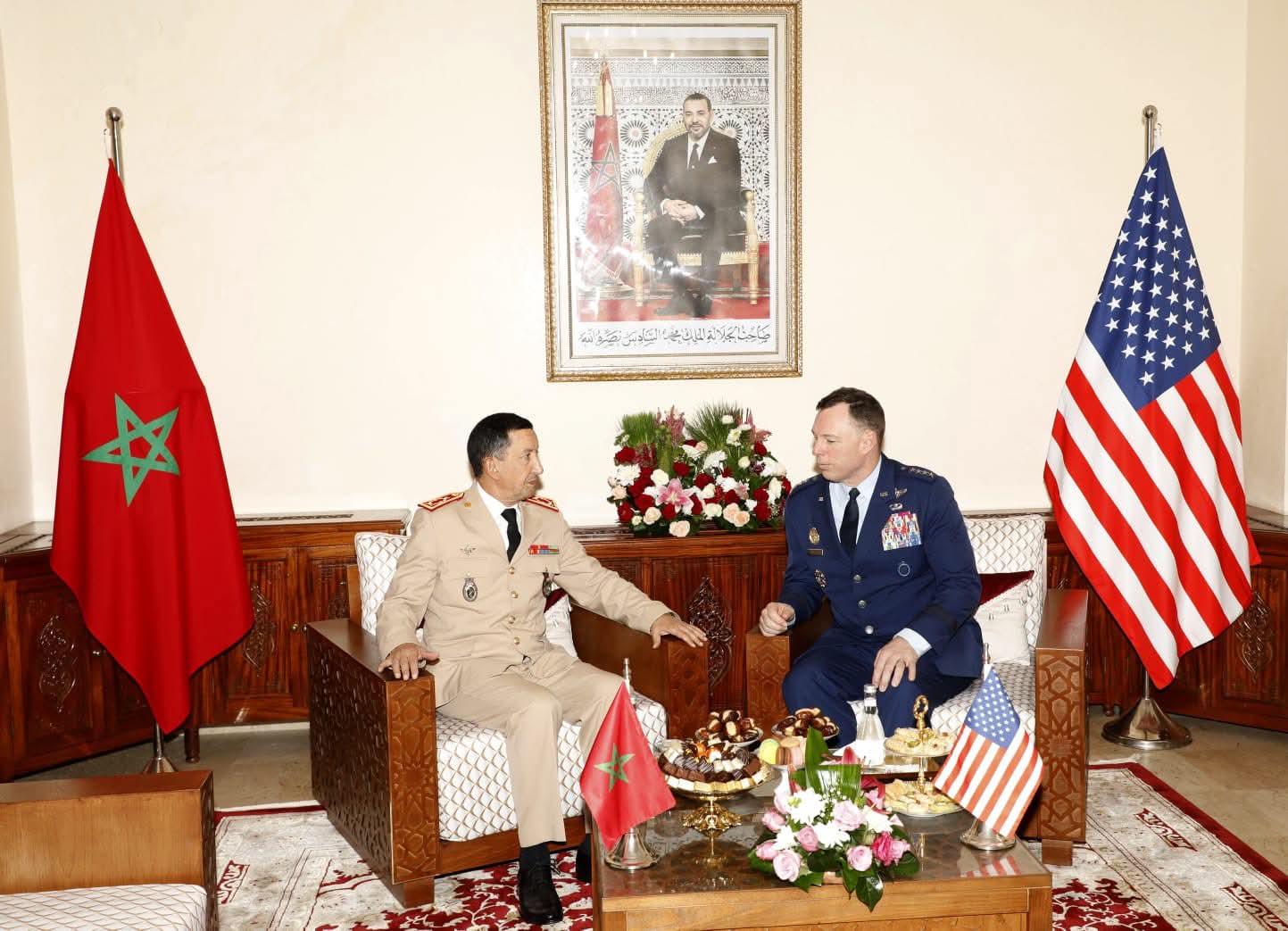
Morocco has emerged as a key partner in Washington’s efforts to strengthen security across Africa, according to General Dagvin Anderson, Commander of U.S. Africa Command (AFRICOM).
In an interview with Moroccan outlet Hespress, Anderson said the continent is now a stage for global strategic competition, with Russia and China seeking influence through varied means.
The US, he stressed, is focused on building “flexible, respectful partnerships” rather than expanding military footprints.
“Our presence isn’t measured by bases or troop numbers, but by the strength of alliances we’ve built over decades,” Anderson said.
“Morocco is pivotal because it understands Africa and has diplomatic and security tools that make it a stabilizing force,” he said.
Anderson noted that extremist groups have shifted tactics, moving from centralized control to dispersed networks exploiting local vulnerabilities. AFRICOM’s approach now prioritizes capacity-building over direct combat, focusing on intelligence sharing, training, and addressing socio-economic drivers of radicalization.
“Morocco offers a successful model that blends security, development, and religious reform,” he said, calling Rabat’s strategy an example for other African nations.
The general highlighted Morocco’s role in safeguarding the Strait of Gibraltar, one of the world’s busiest maritime corridors. With advanced infrastructure like Tanger Med port and strong coastal monitoring, Morocco is “the southern guarantor of stability” for transatlantic trade routes.
AFRICOM works closely with Moroccan forces on joint naval surveillance, real-time intelligence exchange, and regular maritime drills. These include bilateral exercises and large-scale maneuvers under African Lion, which simulate scenarios from anti-piracy operations to humanitarian rescue missions.
The annual African Lion exercise, co-hosted by Morocco, is the largest multinational drill on the continent. Anderson said its value lies in interoperability and trust among allied forces.
“For Morocco, it’s a chance to showcase professionalism and reinforce its status as a responsible regional power,” he added.
Recent editions have expanded to include cyber defense, space coordination, and disaster response.
Anderson concluded that Africa is not a stage for domination but for partnership. Morocco exemplifies this vision as a stable nation with robust institutions and deep regional ties.
“Security in Africa must be African-led,” he said. “Morocco’s credibility makes it a strategic bridge for cooperation and sustainable development.”