Morocco’s aerospace industry is entering a new phase of expansion and global integration, marked by the launch of a major aircraft engine complex by French aerospace leader Safran.
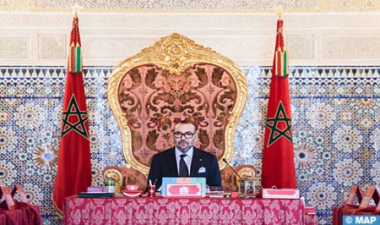
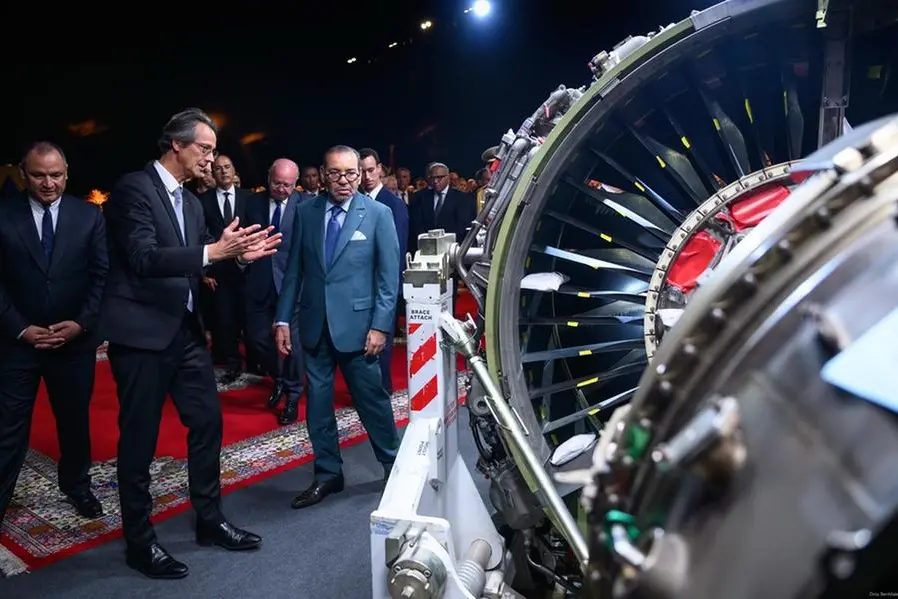
The project, unveiled on October 13 in the presence of King Mohammed VI, reflects the country’s transformation into a strategic hub for high-value aviation manufacturing and services.
Over the past 25 years, Morocco has evolved from a peripheral industrial partner to a central player in Safran’s global operations. Today, eight Safran subsidiaries operate in the country, clustered around Casablanca and Rabat, within a growing ecosystem that supports design, assembly, maintenance, and applied research.
The new complex in Nouaceur, located within the Midparc integrated industrial zone, includes two major facilities: a maintenance center for LEAP engines and a new assembly line for the LEAP-1A model used in Airbus aircraft. Together, they represent an investment of €320 million and will create 900 skilled jobs by 2030.
The expansion aligns with Morocco’s long-term industrial strategy, championed by King Mohammed VI since the early 2000s. By identifying aerospace as a strategic sector, the Kingdom has built a competitive environment that combines infrastructure, talent development, and political stability.
“The presence of His Majesty the King at the launch ceremony speaks volumes about Morocco’s commitment to industrial development,” said Ross McInnes, Chairman of Safran’s Board. “It also reflects the exemplary investment climate fostered by a forward-looking and consistent national vision.”
Industry and Trade Minister Ryad Mezzour emphasized that the project will “anchor Morocco firmly in the global engine manufacturing value chain,” reinforcing the country’s ambition to become a full-cycle aerospace player.
Morocco’s success in aerospace is underpinned by its skilled workforce. Safran has invested heavily in local training, partnering with institutions such as the Institut des Métiers de l’Aéronautique (IMA), OFPPT, and engineering schools to develop a pipeline of technicians and engineers.
“We recruit young Moroccan engineers and train them to meet the highest international standards,” said Abdelhafid Boufettal, President of Safran Aircraft Engine Services Casablanca. “Safety and quality are non-negotiable in aerospace, and Morocco delivers.”
The group has also committed to powering its Moroccan operations with renewable energy starting in 2026, integrating sustainability into its industrial model.
Safran’s expansion is part of a broader trend. Morocco’s aerospace sector has attracted dozens of international manufacturers and suppliers, creating a dense industrial fabric that supports innovation and competitiveness. From component production to engine maintenance, the country now offers a comprehensive value chain.
With over 140 aerospace companies operating in Morocco and exports reaching billions of euros annually, the Kingdom is positioning itself as a leading destination for aerospace investment in Africa and beyond.