After the Algeria-backed Polisario becomes a terrorist organization and magnet of extremists threatening regional peace & stability, two major U.S. National security Institutes have joined several think-tanks urging the Trump administration to take immediate action and add the Polisario armed militia to the U.S. black list, which includes Iranian proxies such as the Houthis, Hamas, and Hezbollah.
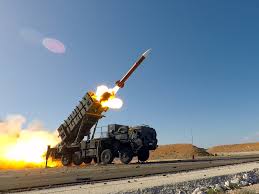
In a joint report, the Allison Center for National Security at The Heritage Foundation and the Heritage Foundation’s Shelby Cullom Davis Institute for National Security said today, Polisario fighters field Iranian-type drones, share desert corridors with tax smuggling routes that feed Sahel jihadists. All this takes place within missile range of the Strait of Gibraltar, one of the world’s most critical maritime choke points.
In 1988, Polisario missiles brought down two U.S. Agency for International Development aircraft, killing five Americans—and the U.S. failed to respond with sanctions, said the report, citing the Polisario unilateral withdrawal in 2020 from the U.N.-brokered 1991 ceasefire and resumption of rocket attacks along Morocco’s 1700-kilometer berm; and warned that foreign consulates, airlines, and companies were “legitimate targets.”
Polisario’s threats rest on a foundation of Algerian sanctuary plus three mutually reinforcing pillars: Iranian military assistance, a growing Russian influence network, and a mature trans-Sahel illicit economy that overlaps with jihadist financing streams, said the authors of the report.
The Polisario militiamen operate from camps around Tindouf, on Algerian soil, beyond the reach of international monitors. This safe haven allows the group to stockpile ordnance, experiment with new systems, and cultivate external sponsors at minimal risk, warned the research paper.
Algerian military aid and budgetary subventions, which cover everything from Washington lobbying budgets to earmarked funds, underwrite administrative operations and payroll, without which the insurgent group could not sustain an armed infrastructure of this scale.
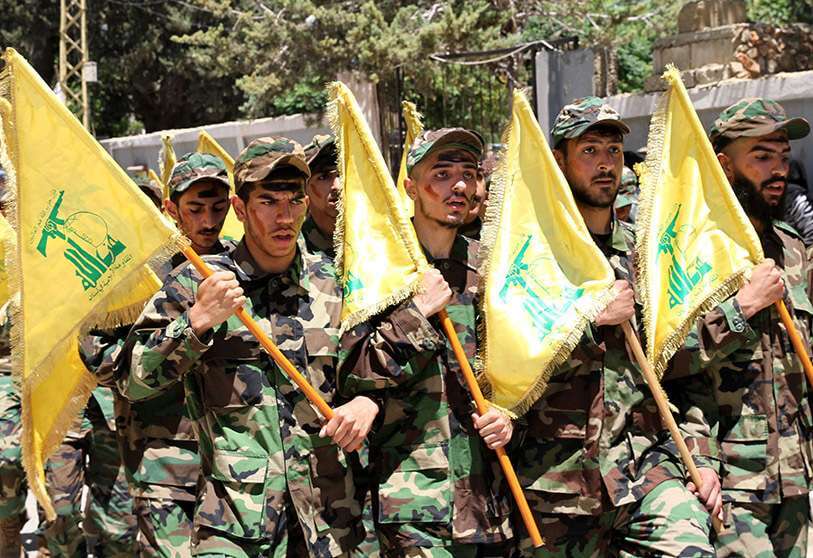
Iran also plays an increasingly well-documented role in supporting Polisario. The affinity dates back at least to 1980, when Polisario guerrillas posed for international cameras holding a portrait of Ayatollah Khomeini. Hezbollah officers have also been involved in training Polisario fighters in Tindouf on assembling and operating Iranian armed drones.
In 2023, the Polisario launched deadly rocket attack against Smara, killing three civilians. Furthermore, Polisario’s long-standing role in the Sahel-Sahara illicit economy now feeds directly into jihadist finance and talent pipelines, said the report, noting that Polisario fighters move bulk hashish east, cocaine north, and Libyan weapons west, with transit “taxes” flowing to al-Qaeda in the Islamic Maghreb.
The report also sounds the alarm bell over the nexus of terrorism, illicit traffic and separatism, saying Tindouf has become now a desert hub where traffickers, Polisario logisticians, and terrorist couriers swap loads and intelligence.
Polisario terrorist Adnan Abu Walid Al Sahrawi, who was killed by French forces in 2021, is clear evidence of this dangerous connexion. Abu Walid Al Sahrawi trained within Polisario’s ranks before founding the Islamic State in the Greater Sahara, orchestrating raids across Mali and Niger.
In November 2021, Polisario warned more than a dozen Spanish companies, including Siemens Gamesa and Acciona, which employ thousands of Americans, to withdraw from Sahara.
Both Trump administration have endorsed Morocco’s autonomy plan as the “ONLY feasible solution” for resolving the Sahara issue. But that diplomatic track must be matched by a security policy that confronts the reality of an armed and violent Polisario network that’s now plugged into Iranian proxy circuits and Sahel-wide terrorist and contraband networks, said the American experts.
The Houthi precedent shows how, if unchecked, a movement initially dismissed as a local insurgency can evolve into a fully-fledged proxy force. If Washington intends to secure its long-term strategic interests in the Western Mediterranean, it cannot allow North Africa to follow that trajectory.