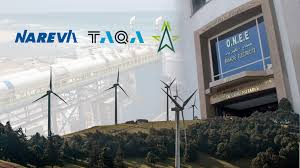
The Moroccan government, electricity and water supplier ONEE together with a consortium including Mohammed VI Investment Fund, TAQA Morocco and Nareva agreed to join forces to develop a sweeping infrastructure program aimed at securing water and bolstering energy production by 2030, for a total investment cost estimated at $14 billion.
The investments have been ushered following a visit by King Mohammed VI to the UAE in 2023, during which Morocco and the Emirates agreed to step up cooperation.
Under the signed memorandums of understanding, a new waterway will connect the Sebou and Oum Rabia river basins, with an annual capacity of 800 million cubic meters, to address growing water scarcity, according to statements by ONEE and TAQA.
The deals also include building five seawater desalination plants in regions including the Oriental, Tangier-Tetouan-Al Hoceima, Souss-Massa, Guelmim, and Tan-Tan. The plants will have a combined capacity of 900 million cubic meters annually and will be powered entirely by renewable energy.
They also teamed up to build a 1400-kilometre high-voltage direct current (HVDC) line, connecting the southern provinces to central Morocco, with a transmission capacity of 3,000 MW. The line is intended to accelerate the integration of renewable energy from the Sahara into the national grid.
Concerning renewable energy development, the consortium will add 1,200 MW of new capacity, primarily wind and solar, with projects spanning from Boujdour to Dakhla.
They will also develop a 1,500 MW combined-cycle gas power plant at Tahaddart in northwestern Morocco to enhance grid stability.
The consortium will structure and secure financing from both domestic and international institutions. ONEE said the projects will be implemented under individual development agreements, the first of which—covering the Tahaddart gas plant—has already been signed. All projects are subject to regulatory approvals.
The program is expected to generate over 25,000 jobs during construction and operation, including more than 10,000 permanent positions. Officials say it will also foster technology transfer, support the emergence of a local industrial ecosystem in desalination and renewables, and spur regional development through improved infrastructure and rural electrification.