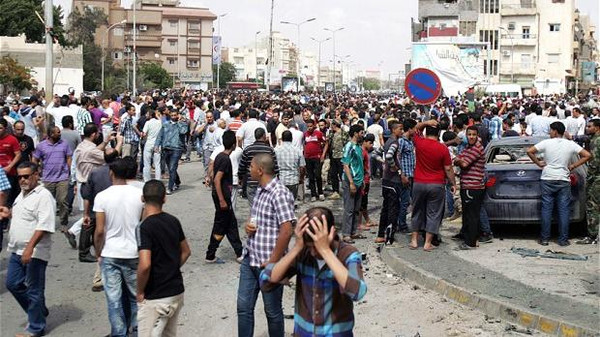
The worst clashes in years in the Libyan capital Tripoli seem to have eased after the announcement of a fragile truce, but the security conditions remain prone to deteriorate in the politically divided country that lacks a central authority.
The Tripoli-based government has announced a ceasefire, after two days of clashes that terrified locals.
The clashes erupted after the killing of a militia leader triggering the worst battles in years.
The fighting had appeared to consolidate the power of Abdulhamid al-Dbeibah, prime minister of the divided country’s Government of National Unity (GNU) and an ally of Turkey, Reuters reported.
The main fighting on May 13 was between the Dbeibah-aligned 444 Brigade and the Special Deterrence Force (Rada), the last major armed Tripoli faction not currently in his camp, the English-language Libyan Observer reported.
Observers voiced fear of the risk of drawing more factions into the clashes in the capital.
Libya has been de facto split between eastern and western governments since 2014. But major fighting has halted since 2020, following a truce.
The UN has so far failed to help Libyan rivals find lasting political solution to their division.
The clashes prompted the oil company NOC to halt oil transfer to the west until stability is restored.