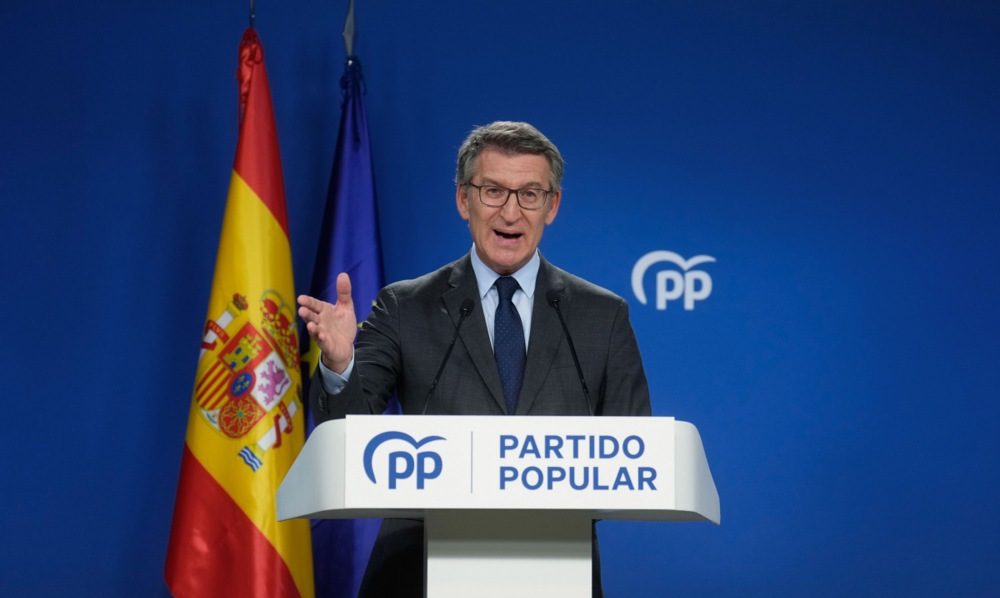
Spanish opposition parties, led by the Partido Popular (PP) under Alberto Núñez Feijóo, Isabel Díaz Ayuso, and Madrid Mayor José Luis Martínez-Almeida, continue to take for granted Morocco’s sustained efforts in migration control, security cooperation, and bilateral partnership while leveling serious accusations against the Kingdom without supporting evidence.
Despite clear statements from Spanish police, intelligence services, and the government of Prime Minister Pedro Sánchez that no proof links Moroccan authorities to the mass migrant arrivals in Ceuta at the end of July 2026, PP leaders have repeatedly accused Morocco of aggression and orchestration.
Feijóo has described the events as a Moroccan “aggression” against Spain. Ayuso has gone further, publicly threatening to sever diplomatic relations with Rabat and militarize the border should she ever lead the Spanish government.
This political offensive has now spilled beyond rhetoric into concrete measures that damage people-to-people ties.
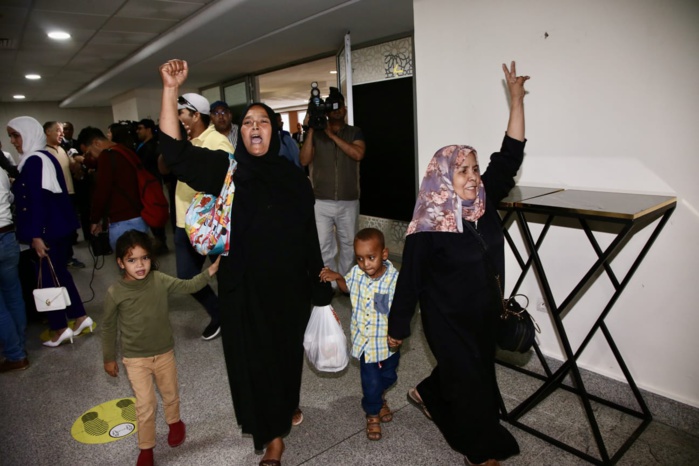
The Madrid city council, controlled by the PP under Almeida, recently refused authorization for a longstanding solidarity fair of Moroccan handicrafts.
Organized annually since 2016 by the Hispano-Arab Association for Development and Culture as part of the “Entre Cultures” intercultural days, the event was a purely cultural and commercial gathering of artisans- not a governmental or political initiative.
After months of administrative processing and additional documentation requests, the district of Centro abruptly denied the permit in August and September, citing newly invoked rules on public space that appear inconsistently applied.
Association president Rachid Ismaili linked the decision to the heated post-Ceuta climate, stating that “at this moment, everything that smells of Morocco must be banned.”
Socialist councilors in Madrid have called the move clearly political and demanded transparency on the criteria used.
The Sánchez government has repeatedly stated that available information does not establish Moroccan orchestration of the Ceuta crossings.
Intelligence warnings shared with Moroccan counterparts prior to the events further contradict claims of deliberate facilitation by Rabat.
Morocco’s Ministry of Foreign Affairs has firmly rejected the accusations. In an official statement, the ministry stressed that “no data, fact, or report establishes any involvement on the part of Moroccan authorities.”\
It posed pointed questions: Why continue leveling accusations against Morocco in the absence of evidence? Why are irregular migrants not being returned when the Moroccan government has officially committed to readmitting them? Why are unaccompanied minors being kept away from their families when Morocco has urgently requested their return?
The answers, Rabat insisted, lie with the relevant Spanish actors. The ministry further declared that Morocco “refuses to be used as a pre-election political pawn” and “does not accept being made the scapegoat in political score-settling.”
It expressed particular regret that historic parties with extensive governmental experience had fallen into “an irrational and populist quagmire” where escalation prevails over common sense.
By transforming unproven claims into tools of domestic confrontation and by obstructing cultural exchanges that had long remained insulated from bilateral tensions, the PP risks eroding the very foundations of a relationship that has delivered concrete results in migration management and regional stability.
Morocco’s consistent efforts in controlling irregular flows and cooperating on security are being taken for granted even as they are publicly denigrated for short-term political gain.