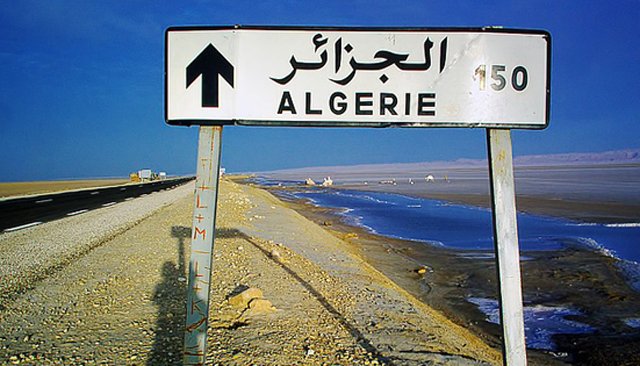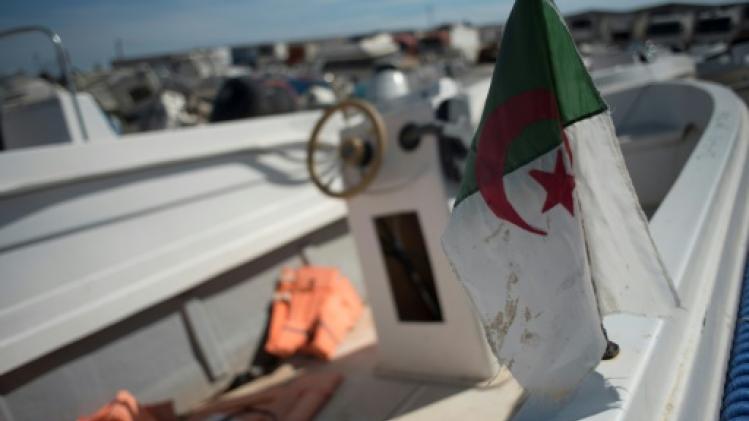
While Spanish political debate remains dominated by the July migrant surge into Ceuta and unfounded accusations directed at Morocco, a more structural shift has taken hold on the Western Mediterranean route shaped by Algeria.
Algeria has in fact become the principal departure point for irregular migrants heading to Europe.
According to converging assessments from Frontex, the International Organization for Migration (IOM), the Spanish Institute for Migratory Analysis (IEAM), and Spanish media, Algeria now accounts for the bulk of maritime departures toward the Iberian Peninsula.
Data cited by El Independiente indicate that more than 75% of sea departures on the Western Mediterranean route in 2025 originated from Algerian coasts.
In the first four months of a recent reporting period, Algerians themselves represented 42% of the 5,647 arrivals recorded in Spain on this route, far ahead of Morocco’s 22 percent.
Unlike the concentrated land pressures seen at Ceuta and Melilla, vessels leaving Algeria disperse widely, targeting the Balearic Islands as well as the coasts of Alicante, Murcia, and Almería.
Sea interceptions by Algerian naval forces have fallen sharply, by 37 percent year-on-year in the early months of 2026.
Alarme Phone Sahara documented over 34,000 expulsions toward Niger that year, with more than 14,600 already in the first five months of 2026. Many are abandoned at the so-called “Point Zero” in the desert in harsh conditions.
Analysts describe this dual approach- strict southern controls paired with reduced northern maritime interdiction – as a socio-political safety valve for the Algerian regime amid internal pressures and youth discontent.
The phenomenon has reached higher social strata, illustrated by the unexplained disappearance of two sons of the late army chief Ahmed Gaïd Salah, with family associates publicly suggesting they may have left clandestinely by boat.
Most Algerian migrants treat Spain as a transit stop before moving onward within the Schengen area, primarily to France.
Dim economic prospects compound the pressures amid warnings from the International Monetary Fund. In its 2026 Article IV consultation conclusions released yesterday, the Fund noted that while Algeria’s diversification efforts have supported growth, large fiscal deficits have eroded both fiscal and external buffers.
Gross official reserves, which stood at $70.6 billion in 2023, are projected to fall from $51 billion in 2025 to $46.5 billion in 2026 and to just $19.8 billion by 2031.
In short, as Spanish attention remains fixed on one flashpoint, Algeria has quietly become the primary launch pad for irregular crossings into Europe, even as its own economic model.