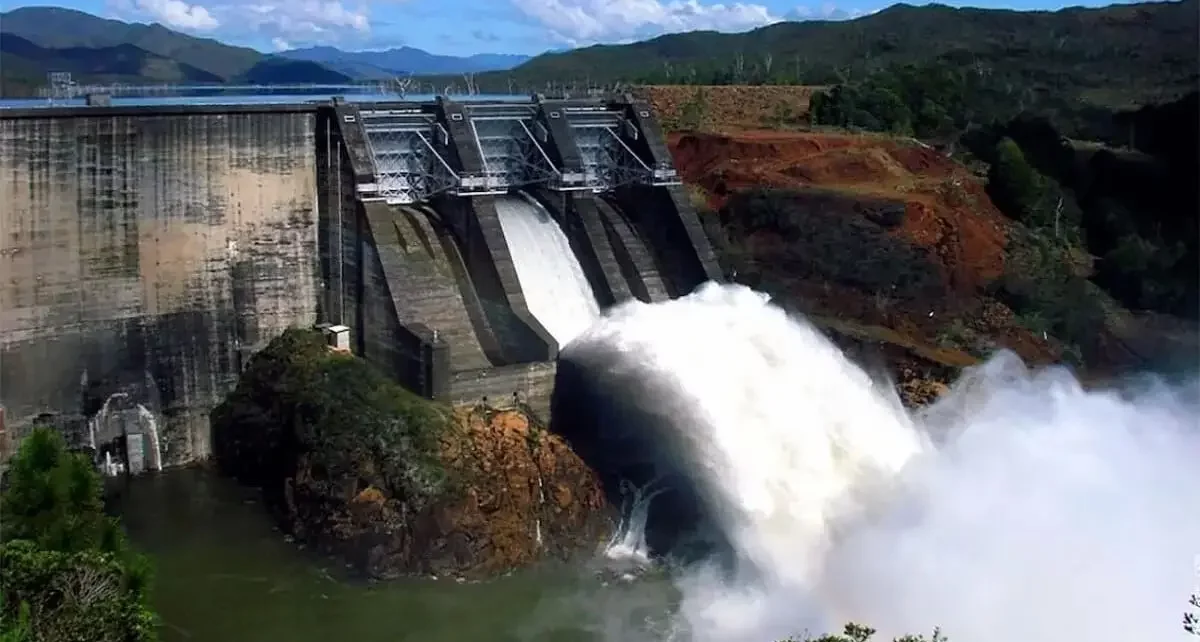
Morocco’s response to persistent water scarcity is shifting from simply seeking new resources or building dams toward a more ambitious approach: connecting its river basins and transferring water to where it is needed, Spanish news outlet Atalayar comments. The strategy centers on a so-called “water motorway,” a network designed to move water from basins with greater resources to those under heavier pressure, with a nearly 300-kilometre link between the Sebou and Oum Er-Rbia catchment areas among its most important projects, capable of transporting up to 800 million cubic meters annually to improve drinking water supply for Settat, Berrechid and southern Casablanca while irrigating some 176,000 hectares in the Oum Er-Rbia basin.
The approach builds on Morocco’s first major inter-basin transfer, linking the Sebou and Bouregreg basins to supply the Rabat-Casablanca corridor. Work began in December 2022 and the system came into service in August 2023; its flow rate rose from an initial 3 cubic meters per second to 15, ultimately supplying more than 560 million cubic meters a year, well above the 350 to 400 million initially forecast, replenishing the Sidi Mohammed Ben Abdellah dam and easing pressure on the Al Massira dam.
Rachid Sari, director of the African Centre for Strategic Studies, told Atalayar that Morocco holds an advantage in developing such projects since its rivers and valleys lie entirely within its borders, giving it latitude to manage and redistribute its resources, particularly to safeguard agricultural production and limit the impact of shortages on prices and purchasing power.
The Sebou-Oum Er-Rbia link could eventually extend to Al Massira dam, raising total transfer capacity toward 1,200 million cubic meters annually.
The strategy forms part of the National Program for Drinking Water Supply and Irrigation, backed by more than 130 billion dirhams in investment, and is paired with new dams, desalination plants, wastewater reuse and efforts to reduce distribution losses. Atalayar notes that climate change, through less predictable rainfall and rising demand, is making the shift from simply securing more water toward ensuring it reaches the right place at the right time increasingly urgent, with dams, inter-basin transfers, desalination and water reuse together forming the comprehensive system Morocco is building to withstand future droughts.