Morocco is marking this Thursday the 73rd anniversary of the Revolution of the King and the People, commemorating one of the defining episodes in the Kingdom’s modern history. The commemoration traces back to August 20, 1953, when colonial authorities forced the late King Mohammed V, alongside the Royal Family, into exile, believing the move would extinguish the national struggle and break the bond between the throne and the people.
The High Commission for Former Resistance Fighters and Former Members of the Liberation Army outlined in a statement released on this commemoration that Moroccans had already resisted foreign encroachment for decades before the exile, citing battles such as Elhri in the Middle Atlas in 1914, Anoual in the Rif between 1921 and 1926, Boughafer near Ouarzazate, and Jbel Baddou near Errachidia in 1933, as well as opposition to the 1930 Berber Dahir.
These efforts culminated in the January 11, 1944 Independence Manifesto, followed by King Mohammed V’s landmark 1947 Tangier speech openly calling for Morocco’s independence and national unity.
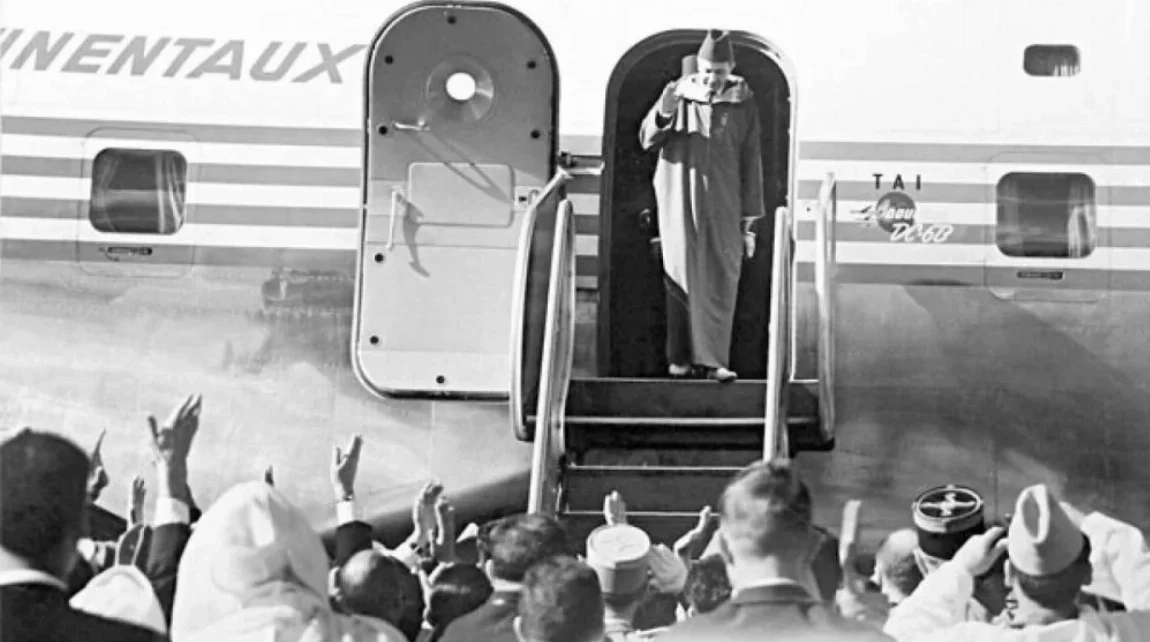
That speech triggered escalating tensions with the French protectorate’s Residency, which sought to divide the throne, the people and the liberation movement, ultimately leading colonial authorities to exile the King and the Royal Family on August 20, 1953. The exile spurred resistance fighters to intensify their actions, and the Liberation Army launched operations in Morocco on October 1, 1955, forcing colonial authorities to allow the King’s return on November 16, 1955.
Morocco’s path to full territorial unity continued after independence with the recovery of Tarfaya in 1958 and Sidi Ifni in 1969, followed by the Green March under King Hassan II, leading to the departure of the last foreign troops from the Moroccan Sahara on February 28, 1976, and the recovery of Oued Ed-Dahab province on August 14, 1979.
This year’s commemoration includes educational and cultural programming across regional and provincial offices and historical memory sites nationwide, organized in coordination with government departments, public institutions, elected bodies and civil society organizations, with participation from former resistance fighters, Liberation Army veterans, and the families of martyrs.