The Nigeria-Morocco Atlantic African Gas Pipeline has crossed a major political threshold after member states of the Economic Community of West African States (ECOWAS) formally signed an agreement endorsing the transcontinental energy project, transforming what began as a bilateral initiative into a flagship regional undertaking.
The signing, which took place at the ECOWAS summit in Sierra Leone’s capital, marks collective support from West African governments for a project designed to connect Nigeria’s and West Africa’s vast gas reserves with markets across the region, Morocco and ultimately Europe, according to a joint Moroccan and Nigerian statement.
Originally championed by Morocco’s King Mohammed VI and former Nigerian President Muhammadu Buhari, the project continues to enjoy the backing of Nigerian President Bola Ahmed Tinubu.
It is being jointly developed by Morocco’s National Office of Hydrocarbons and Mines (ONHYM) and Nigeria’s state-owned Nigerian National Petroleum Company Limited (NNPC Ltd).
The Freetown accord clears the way for the next phase of development, including the creation of a dedicated project company headquartered in Casablanca and a governing body – the Pipeline Higher Authority – that will be based in Abuja, the joint ONHYM and NNPC statement said.
These institutional structures are expected to pave the way for investor mobilization and preparations for a final investment decision, it said.
A separate signing ceremony involving Morocco and Mauritania, which are not ECOWAS members, is expected to take place at a later date in the presence of the Nigerian president, completing the project’s legal and political framework.
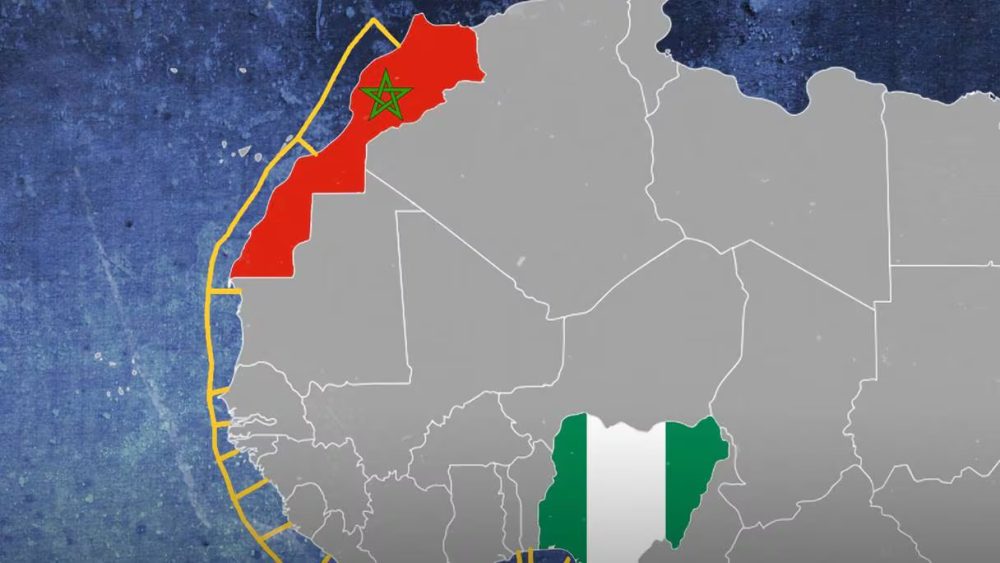
Once completed, the Atlantic African Gas Pipeline will stretch along Africa’s Atlantic coastline, crossing 13 countries before connecting to the Maghreb-Europe gas pipeline in northern Morocco.
Designed with an annual transportation capacity of 30 billion cubic meters (bcm) of natural gas, the pipeline is expected to become one of the continent’s largest energy infrastructure projects. Up to 15 bcm could be exported to Morocco and European markets, while the remaining volumes would serve growing energy demand across West Africa.
Estimated to cost around $25 billion, the project aims to create an integrated regional gas market, strengthen electricity generation capacity, support industrialization and improve the exploitation of Africa’s natural resources.