The twin summits held in Nairobi on May 11 and 12 — the Africa Forward Forum and the fourth Summit of the Congo Basin Climate Commission — mark what the editorialist of Aujourd’hui Le Maroc publication describes as a qualitative shift in the nature of African strategic gatherings. What was conceived at Marrakech in 2016, on the margins of COP22, as primarily an environmental coordination framework has evolved into something considerably more consequential: a space where climate, water, carbon markets, green financing, and infrastructure investment intersect in ways that directly shape geopolitical influence.
The Congo Basin’s 220 million hectares of tropical forest are no longer looked at solely as an ecological asset. In the world that is rapidly taking shape, they represent a strategic resource: the largest tropical carbon sink outside the Amazon, a continental water reservoir, and a bargaining chip in the emerging global architecture of carbon credits and green financing. The Blue Fund for the Congo Basin, whose donor roundtable is scheduled to take place in Brazzaville on May 26, is one of the mechanisms through which this asset is being monetized and its stewardship financed.
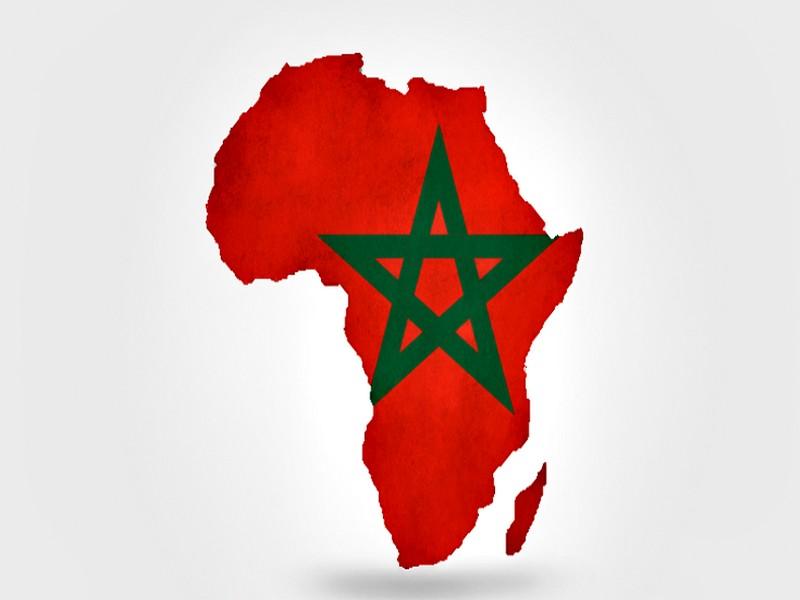
Morocco’s participation in both events goes well beyond protocol. Head of Government Aziz Akhannouch led a delegation that included the ministers of Energy, Health, and Investment alongside a substantial CGEM private sector contingent — a composition that signals that these are economic and commercial engagements, not merely diplomatic appearances.
In the publication’s analysis, this is framed as an expression of Morocco’s deliberate effort to position itself as a provider of solutions rather than a recipient of assistance: energy expertise, water management experience, industrial capacity, and infrastructure investment.
Africa Forward itself represents France’s most consequential attempt in years to reset its relationship with the continent. The choice of Nairobi — an Anglophone capital — as the venue is itself a symbolic break with the Françafrique tradition of privileging bilateral contacts with former francophone colonies. French President Macron’s pledge of 23 billion euros in African investment, with 250,000 jobs to be created across France and Africa, was the headline economic announcement, but it was accompanied by language that explicitly rejected the old aid-and-assistance model in favor of co-investment and mutual benefit.
The editorialist’s broader argument is that a new geopolitical battle is taking shape around Africa’s resources — not the traditional competition for minerals and oil, but a more complex contest for influence over water security, green energy, carbon credits, and digital infrastructure. In this reconfigured landscape, Morocco is attempting to occupy a distinctive position: a country that can speak credibly to European partners on their own terms, invest substantively in the continent, and offer tested operational models in energy, water, and logistics that other African nations are seeking.