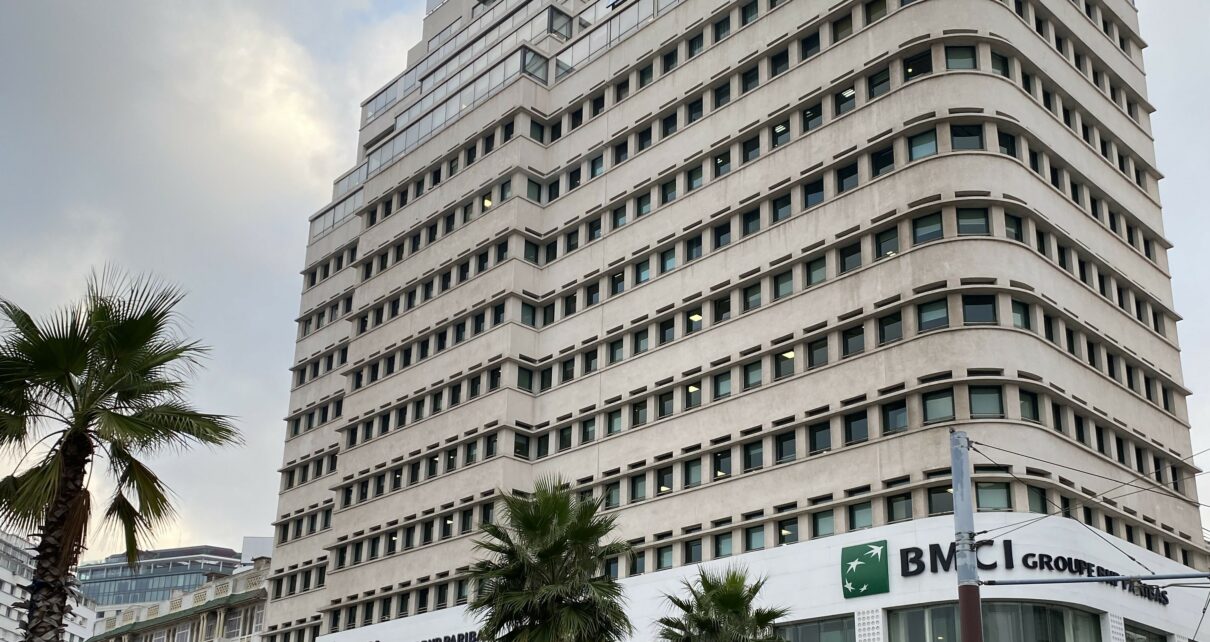
Moroccan conglomerate Holmarcom is set to deepen the shift toward local ownership in the kingdom’s banking sector with its planned acquisition of BMCI from France’s BNP Paribas, in a deal that underscores the exit of the last French bank from Morocco’s retail lending.
After completion of regulatory requirements, Holmarcom plans to merge BMCI with Crédit du Maroc, which it acquired from France’s Crédit Agricole in 2022.
The combined entity would operate 552 branches out of Morocco’s 5,701-strong banking network and post a combined net profit of 1.25 billion dirhams ($125 million) based on 2024 figures, making it the country’s fifth-largest bank, according to weekly magazine Challenge.
The pending transaction follows a series of exits by French banks from Morocco and other African markets, with local players stepping in.
Crédit du Maroc’s sale by Crédit Agricole marked a first major shift, followed by Société Générale’s disposal of its Moroccan subsidiary to Saham Group in 2024, now rebranded as Saham Bank.
The planned sale of BMCI by BNP Paribas, once completed, will further reduce the footprint of French lenders in the kingdom.
Beyond Morocco, similar trends have unfolded across Africa. BNP Paribas has exited several markets, including the sale of BICICI in Côte d’Ivoire, while Société Générale has divested units in countries such as Burkina Faso, Congo-Brazzaville and Chad.
Moroccan banking groups, notably Attijariwafa bank, Banque Centrale Populaire (BCP) and Bank of Africa, have expanded regionally by acquiring or building subsidiaries, consolidating their presence across West and Central Africa.
Holmarcom’s latest move is seen as part of this broader repositioning. “This is more than a capital transaction – it signals the maturity of Morocco’s financial sector and its ability to take over and develop assets historically held by large European groups,” a source familiar with the matter told Challenge.
The gradual withdrawal of French banks reflects shifting dynamics in both Morocco and Africa more broadly. Once dominant players, French institutions are increasingly reassessing their international exposure, while Moroccan groups have gained the financial strength and technical expertise to assume control.