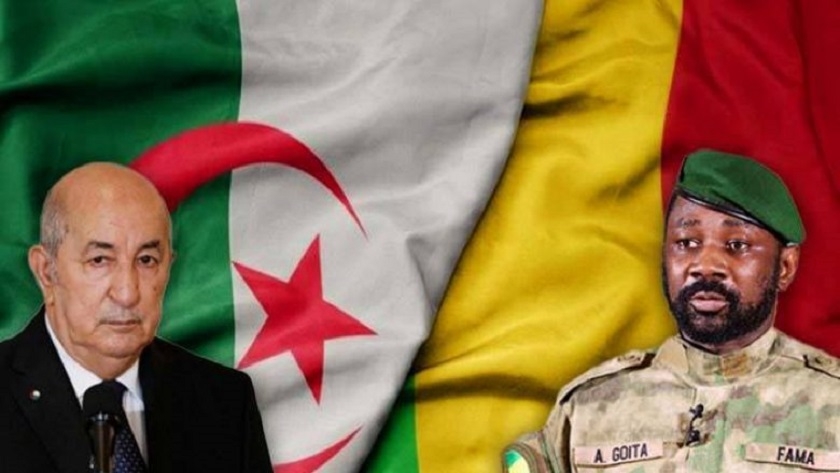
Morocco and Mali have fostered their bilateral ties with a watershed decision announcing Bamako’s support for Morocco’s sovereignty over the Sahara and its withdrawal of recognition of Algerian separatist proxies the Polisario. This takes place at a time Mali complains of Algerian bullying through manipulating terrorist groups and Tuareg separatists in its north.
Morocco has shown resilience in the face of the Algeria-sponsored Polisario militias since the mid‑1970s. For decades, Rabat stood as a bulwark foiling Algeria’s attempt to stoke separatism and destabilization in the region. The decades-long sustained Algerian funding and arming of the Polisario has now collapsed on the solid rock of Morocco’s historical right to its territorial integrity as the UN Security Council, global powers and much of Africa consider the autonomy plan as the only solution to the Sahara issue.
Mali has also been confronting a similar Algerian pattern, one marked by manipulating terrorist and separatist groups while showing ambiguity in public and coercion in practice.
According to Malian authorities, the roots of Mali’s northern crisis are inseparable from Algeria’s own civil war in the 1990s. Many of the leaders and fighters who later spearheaded terrorist and extremist groups in northern Mali are described by Bamako as having emerged directly from Algerian networks in connivance with the army.
Al‑Qaida in the Islamic Maghreb (AQIM) and other terrorist factions that devastated northern Mali are widely traced by regional observers to Algerian militant groups that rebranded, relocated and entrenched themselves across porous borders. Mali accuses Algeria of exporting these terrorist groups south leaving the Sahel struggling with Algeria’s terrorism legacy.
Tuareg Issue and Political Manipulation
Bamako is particularly critical of Algeria’s role in backing Tuareg movements. While presenting itself as a mediator, Algeria is accused by Malian officials of selectively protecting, legitimising and politically cultivating certain Tuareg factions, even as they challenged Mali’s sovereignty.
The 2015 Algiers Peace Agreement, brokered by Algeria, is now portrayed in Bamako as a deeply flawed framework that entrenched armed groups, froze insecurity, and restricted Mali’s ability to reassert control over its own territory. Malian leaders argue the accord served Algeria’s influence more than Mali’s stability.
Since Mali formally declared the Algiers Accord obsolete in January 2024, relations with Algiers have sharply deteriorated. Authorities in Bamako say this decision exposed Algeria’s true position: that of a stakeholder determined to retain leverage over northern Mali.
Drone Incident and Diplomatic Breakdown
The fracture became undeniable when Algerian forces shot down a Malian military drone in late March 2025 near the border town of Tin Zaouaten. Mali said the drone was operating inside its own territory during a counter‑terrorism mission. Algeria claimed airspace violations but failed, according to Bamako, to provide convincing evidence.
Mali described the incident as a hostile act designed to shield armed groups and hinder anti‑terrorist operations. The fallout was immediate and severe. Ambassadors were recalled, airspace was closed, and Mali later took the unprecedented step of filing a case against Algeria before the International Court of Justice.
Malian officials accuse Algeria of violating basic diplomatic norms, from inflammatory public statements to what they describe as open hostility toward Mali’s transitional authorities. Algiers’ rhetoric, including dismissive language directed at atmosphere of intimidation rather than cooperation.
For both Morocco and Mali, the sense of grievance now converges. Morocco and Mali realize that Algeria’s reliance on proxy forces, manipulation of armed movements, and diplomatic obstruction has produced long‑term insecurity rather than peace.