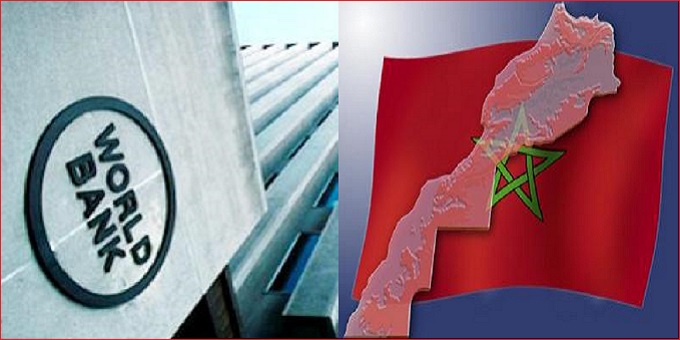
Morocco’s economy is expected to remain resilient in 2026, supported by domestic recovery drivers and ongoing structural reforms, even as geopolitical tensions in the Middle East weigh on the wider region, the World Bank said in its latest economic update.
In its Middle East, North Africa, Afghanistan and Pakistan (MENAAP) Economic Update, the World Bank forecast 4.2% growth for Morocco in 2026, reflecting solid underlying momentum despite a marginal downward revision of 0.2 percentage points from its January outlook due to intensified external shocks.
The institution said Morocco continues to show greater resilience than many regional peers, even as higher energy prices and tighter global financial conditions weigh on net oil‑importing economies.
“As a net energy importer, Morocco is exposed to elevated oil and gas prices,” the report noted, pointing to pressure on the trade balance and production costs. However, the World Bank stressed that the impact remains manageable relative to countries more directly affected by the regional conflict.
While global uncertainty has increased volatility across emerging markets, Morocco’s macroeconomic fundamentals continue to provide stability, the report said, adding that domestic demand and sectoral diversification help cushion the overall growth outlook.
The World Bank expects inflation to rise moderately to 2.4% in 2026, up from 0.8% in 2025, reflecting higher global prices rather than domestic overheating. The increase remains within a range considered consistent with macroeconomic stability, it said.
Morocco’s growth prospects are also supported by a rebound in agricultural output, which is expected to play a stabilising role after periods of climate‑related volatility. Agriculture remains a key buffer for overall GDP performance, particularly in rural employment and domestic consumption.
In contrast, the World Bank projected a much sharper slowdown across the MENAAP region as a whole, excluding Iran, with growth falling from 4.0% in 2025 to 1.8% in 2026, largely due to steep revisions in Gulf Cooperation Council (GCC) economies and Iraq following the escalation of conflict.
“The risks remain tilted to the downside at the regional level,” the World Bank warned, noting that a prolonged conflict could deepen economic disruptions. However, Morocco’s diversified economy limits its exposure compared with oil‑dependent countries.
According to the World Bank, Morocco’s experience demonstrates how targeted reforms and public‑private partnerships can support growth and job creation, even in a challenging external environment.