Morocco has adopted its first-ever comprehensive public finance management strategy, setting out a structured reform roadmap to 2032. Drawn up with the support of major international partners and grounded in the findings of a PEFA assessment — the internationally recognized benchmark for evaluating public financial management systems — the framework aims to modernize fiscal governance across three interconnected pillars: performance, sustainability and transparency.
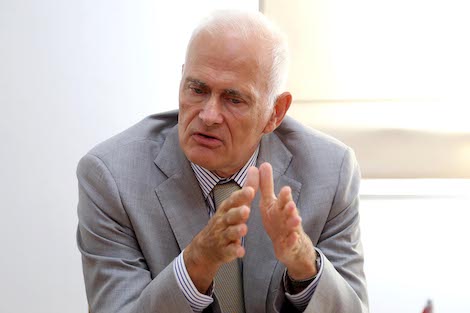
Governance of the reform will be entrusted to a dedicated inter-ministerial steering committee, chaired by Fouzi Lekjaâ, Minister Delegate in charge of the Budget, with technical oversight coordinated by Aziz Khayati, Director of the Budget at the Ministry of Economy and Finance. The architecture reflects the government’s determination to manage this strategic undertaking through close institutional coordination rather than dispersed administrative responsibility. The World Bank, the European Union and the African Development Bank all contributed to shaping the roadmap.
On the performance front, the strategy moves Morocco toward results-based budgeting, reinforcing program budgets and management control tools. It also expands the perimeter of public finance management to incorporate the performance of state-owned enterprises, and strengthens the alignment between public policies and capital expenditure targeting. The sustainability pillar addresses revenue mobilization through a broader tax base, improved collection and tighter controls, while introducing dynamic fiscal risk mapping that will identify, quantify and track budgetary threats throughout the budget cycle.
A forward-looking alert system will be established to flag potential deviations early, drawing on risk probability and impact matrices to enable proactive adjustments to strategic frameworks or action plans. On transparency, the strategy commits to enriching the existing budget transparency action plan, creating a participatory platform to widen stakeholder engagement in the budgetary process, and strengthening internal control and audit mechanisms across the full revenue and expenditure chain.
Digital transformation is woven through the entire strategy. An integrated digital governance architecture based on interoperability between information systems will be deployed, and a centralized data exchange platform will be built to meet growing analytical demands. Artificial intelligence features among the emerging technologies earmarked for accelerating administrative modernization — a signal that Morocco intends its fiscal reform to serve not only current efficiency goals but also the longer-term ambitions of the Maroc Digital 2030 agenda.