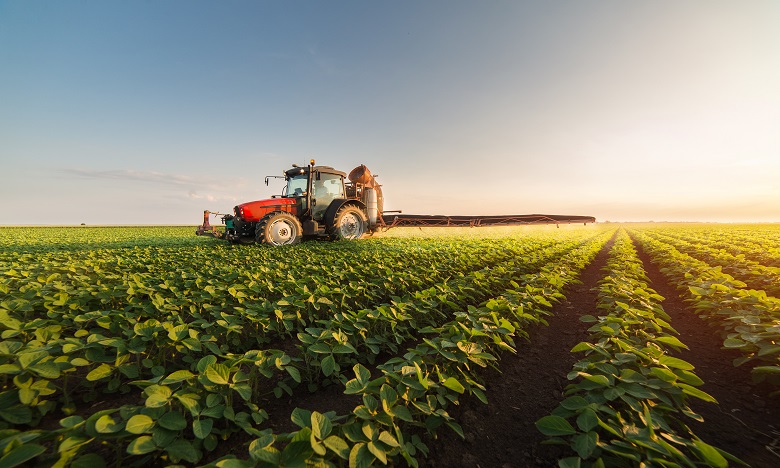
Morocco’s economy is projected to grow by 5% in 2026, up from an estimated 4.7% in 2025, with the acceleration largely driven by a rebound in agriculture made possible by abundant and well‑distributed rainfall since late November 2025, Morocco’s planning agency said.
National dam filling rates have exceeded the 50% threshold for the first time in several years, reinforcing agricultural output and providing broader support to economic activity after successive drought‑affected seasons, according to water ministry levels.
Agriculture is expected to reclaim its role as the main growth driver in 2026, according to the planning agency’s HCP recent forecasts for 2026.
The institution acknowledged that the agricultural campaign initially faced a notable rainfall deficit, raising concerns late in 2025. However, heavy and well‑distributed precipitation from the end of November onward largely offset early shortfalls, improving soil moisture, supporting crop development and raising expectations for a favorable harvest.
These conditions have also contributed to the replenishment of dam reserves and groundwater, easing pressure on water resources after years of hydric stress.
Major basins have recorded sharp improvements, including Loukkos, Sebou, Bouregreg, Tensift and Souss‑Massa, while other basins such as Guir–Ziz–Ghéris, Moulouya and Oum Er‑Rbia have also posted gains despite persistent disparities. This broad‑based hydrological recovery strengthens water security for agriculture and urban supply alike.
The HCP said improved rainfall and water availability are expected to boost rural incomes, support livestock recovery, helped by better pasture conditions and the royal decision to suspend the 2025 Aïd Al-Adha sacrifice, and reinforce domestic demand, which is projected to grow by 5.7% in 2026.
Inflation is forecast to stand at 1.3%, providing a more stable macroeconomic environment.
While external risks linked to geopolitical tensions and slower growth in Europe persist, the HCP described the 2026 outlook as part of a four‑year phase of continuous economic acceleration.