The Authenticity and Modernity Party (PAM) emerged as the leading force in the 2026 legislative elections with 97 seats, followed by its former partners in the outgoing government the RNI and Istiqlal, while the PJD came fourth in a tight race, according to provisional results.
RNI, which led the outgoing government, had 66 seats, the Istiqlal Party 65, while the PJD secured 54, according to the interior ministry.
The Popular Movement (MP) 29, the Socialist Union of Popular Forces (USFP) 26, the Party of Progress and Socialism (PPS) 19, and the Constitutional Union (UC) 17.
Smaller parties rounded out the results. The Democratic and Social Movement and the Left Alliance with 8 seats each, the Front of Democratic Forces and the Equity Party with 2 each, and the Neo-Democrats and the Party of Unity and Democracy with 1 seat apiece.
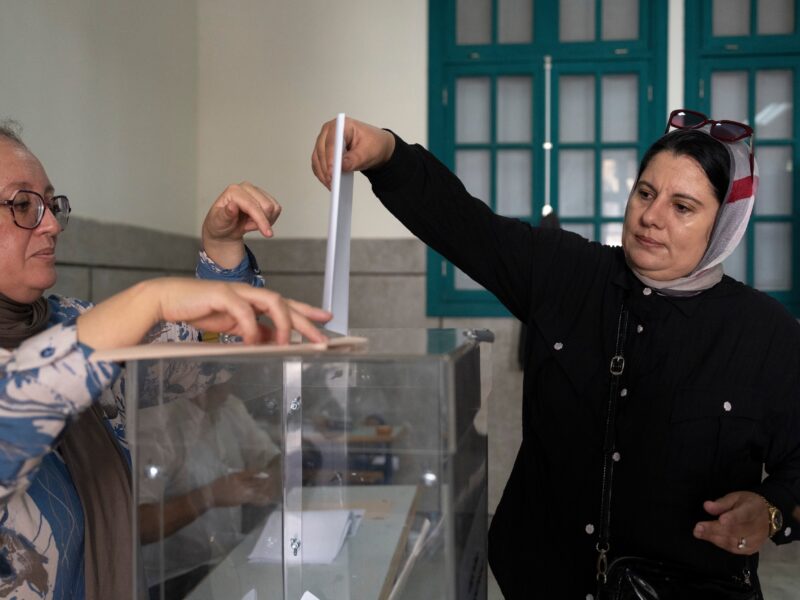
Nearly 6 million voters took part out of 15.8 million registered electors, producing a national turnout of 38%, according to interior ministry data.
This represents a clear drop from the 50.88% recorded in 2021 and the 42.27% in 2016.
Turnout was notably higher in the southern provinces, the Sahara, reaching 77% in Laâyoune-Sakia El Hamra and 65.42% in Dakhla-Oued Ed-Dahab. Authorities opened 40,694 polling stations supervised by 3,931 central offices.
Twenty-eight political parties (including one alliance) fielded 1,847 lists totaling 7,277 candidates. That is an average of 18 candidates per seat.
Women accounted for 2,659 candidacies, or 37% of the total, with 1,783 running on regional lists, 876 on local lists, and 120 heading local lists.
The elections took place under reforms aimed at enhancing political integrity, transparency, and the participation of youth and women.
Central, regional, and provincial committees monitored the process under judicial oversight, addressing any reported irregularities. No major incidents disrupted the overall conduct of the vote.
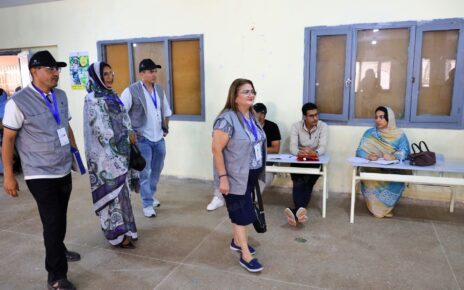
Coverage was provided by 3,006 accredited observers, including 2,023 from civil society associations, 783 from the National Human Rights Council (CNDH), and 200 international observers from Africa, Europe, the Americas, and the Middle East.