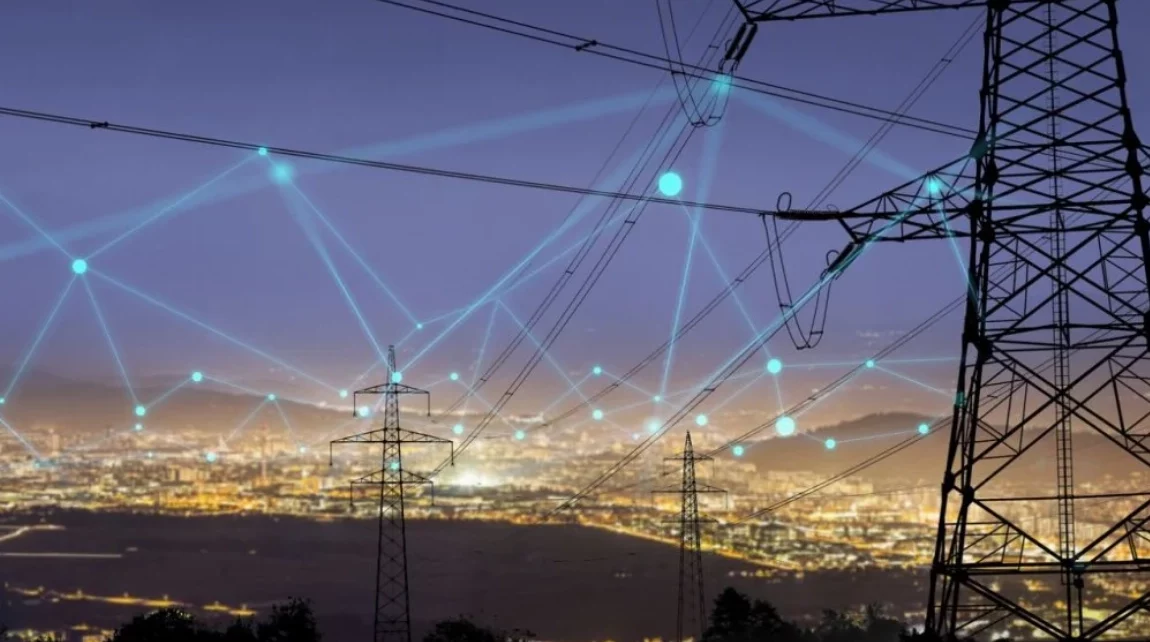
Morocco produces dense, technologically sophisticated research on smart electrical grids, but that academic activity has yet to translate into a structural transformation of the country’s energy system, according to a systematic review by researchers at Mohammed VI Polytechnic University (UM6P), reported by Le Matin daily. Of 291 studies identified across four international scientific databases, 91 were retained under the “PRISMA” methodology to build what the authors call the most complete synthesis to date of Morocco’s smart grid research.
Between 2014 and 2023, national electricity production more than doubled, from 1,022 to 2,388 kilotons of oil equivalent, driven mainly by wind power, which more than tripled to 1,702 ktoe, while solar rebounded to 549 ktoe after a 2022 dip. But growth has not kept pace with demand: total energy consumption, including imports, rose from 18,710 to 22,726 ktoe over the same period, and Morocco’s energy dependency rate hovered between 85 and 91 percent throughout the decade before easing to 86 percent in 2023. The net energy bill peaked at 148.9 billion dirhams in 2022 amid the global energy crisis before easing to 116.8 billion in 2023, while electricity export revenue stayed marginal at 2.3 to 5.2 billion dirhams annually. Projections based on 2014-2023 data see consumption reaching around 25,500 ktoe by 2030 against domestic production of just 3,400 ktoe.
Within the reviewed literature, energy management and optimization led research priorities at 21.3 percent of studies, followed by predictive forecasting and grid-code compliance at 16.9 percent each, while renewable integration accounted for 15.7 percent and rural microgrids 10.1 percent. Policy and regulation, smart mobility and smart-city integration each represented only 1 to 3.4 percent of the literature, a gap the study calls problematic given Morocco’s progress on transport electrification. The authors identify five structural obstacles: high infrastructure costs against competing budget priorities, regulatory gaps beyond the renewable energy law, ageing distribution infrastructure with uneven automation, growing cybersecurity and data-governance risks as smart meters expand, and limited public understanding of dynamic pricing tools.
The researchers propose a five-pillar response, regulatory foundations, infrastructure modernization, technological integration, institutional capacity, and governance and public engagement, organized into a roadmap running through 2040: pilot smart-meter rollouts in Casablanca and Rabat and rural microgrids near-term (2025-2027), national advanced metering and SCADA deployment with dynamic pricing by 2030, and AI-driven real-time dispatching and vehicle-to-grid integration by 2040. The authors stress that modernization without regulatory reform and stronger distribution-operator capacity would remain insufficient to absorb Morocco’s growing share of intermittent renewables expected by 2030, a grid-stability risk several reviewed studies identify explicitly.