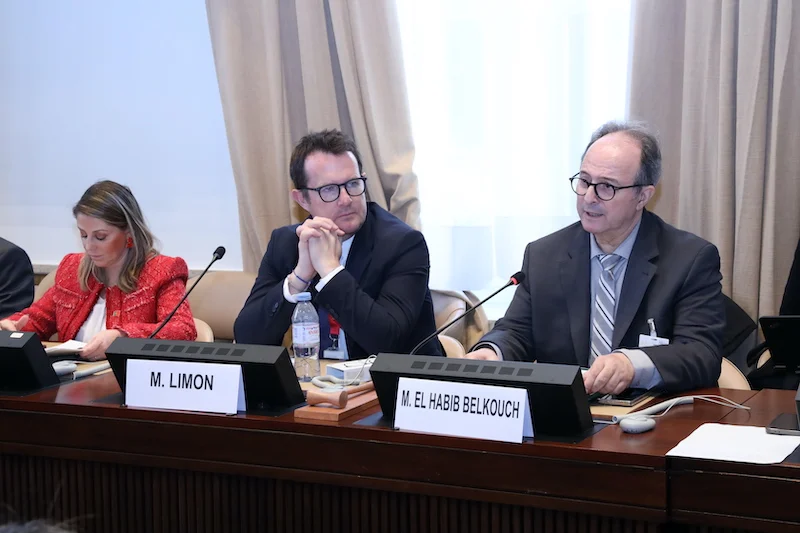
The United Nations Population Fund has described its partnership with Morocco as “strategic,” signaling a deepening alignment between the two institutions on human rights, reproductive health and gender equality. Alfonso Barragues, Deputy Director of the UNFPA’s Geneva liaison office, made the declaration on the sidelines of the 62nd session of the Human Rights Council, following a meeting with El Habib Belkouch, Morocco’s Interministerial Delegate for Human Rights.
The partnership covers several interconnected areas. At its core is the reduction of maternal mortality and the improvement of maternal health services across Morocco. Closely linked is the UNFPA’s commitment to combating violence against women and girls, including efforts to eradicate harmful practices such as early marriage. Barragues stressed that access to sexual and reproductive health services must reach women throughout the country, not only through hospitals but through an extended network of primary health care centers capable of serving more remote populations.
Beyond direct health delivery, the UNFPA is also engaged in supporting Morocco’s public institutions in designing and implementing related policies. This includes collaboration with the ministries of Education, Health and Social Protection, as well as direct engagement with women’s organizations and youth groups on the ground. The approach is designed to ensure that international standards are not merely endorsed on paper but translated into concrete interventions at the local level.
Barragues was explicit about the value placed on the partnership with Morocco’s Interministerial Delegation for Human Rights. He described it as a mechanism for transforming international recommendations into actionable programs and field-level results, positioning the DIDH as a key institutional interlocutor in translating global commitments into national delivery.
The statements came during Morocco’s active participation in the 62nd session of the Human Rights Council, where Rabat has been engaged across multiple agenda items. The UNFPA’s endorsement of the bilateral relationship adds to a pattern of international acknowledgement of Morocco’s progress on social and gender indicators, while also framing areas where continued investment and policy attention remain warranted.