A visit by a senior Moroccan delegation to the US National Archives in Washington last April has brought renewed attention to the documentary record behind the 1786 Treaty of Peace and Friendship between Morocco and the United States, according to Medias24, which examined the holdings identified by the archive.
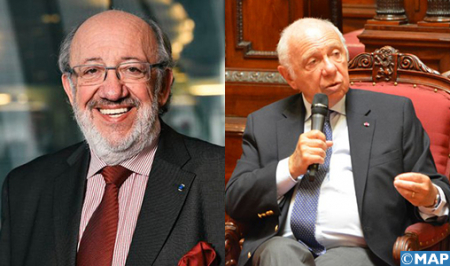
The April visit, led by Minister in Charge of National Defense Administration Abdeltif Loudyi and Royal Armed Forces Inspector General Mohammed Berrid, took place after the 14th Morocco-US Defense Consultative Committee meeting and included a viewing of the original 1786 treaty, long presented as the foundation of the longest unbroken diplomatic relationship in US history.
Archivist Jane Fitzgerald told Medias24 the core sources sit within the Papers of the Continental Congress, tracing the first contacts between Morocco and the fledgling United States and the negotiation led by envoy Thomas Barclay for commissioners John Adams and Thomas Jefferson, alongside the General Records of the US Government, which hold the treaties themselves.
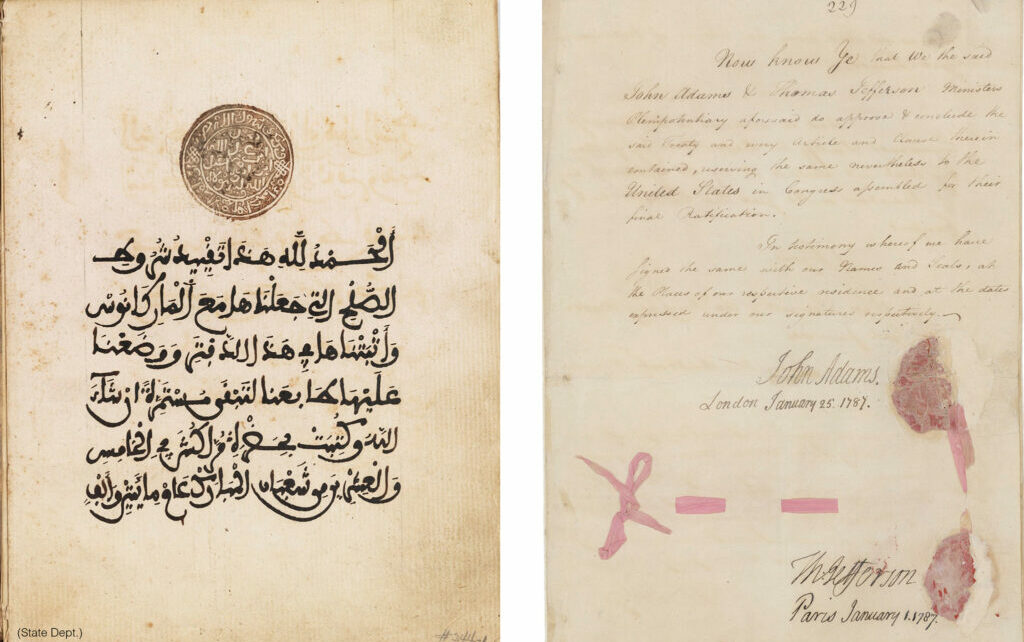
Barclay reached Marrakech on June 19, 1786, was received twice by Sultan Sidi Mohammed ben Abdellah, and secured approval of the accord on June 23, with the sealed Arabic original handed to him five days later. The 25-article treaty, approved by Jefferson in Paris and Adams in London before congressional ratification on July 18, 1787, covered navigation, trade, protection of citizens and treatment of vessels.
The same microfilm reel also holds Morocco’s 1836 treaty with Washington, described as the oldest treaty of its kind continuously in force in US history, and the 1865 Cape Spartel Lighthouse convention. Records at a separate archive in College Park, Maryland, extend the story, documenting the 1821 gift by Sultan Moulay Slimane of a Tangier building that served as the American Legation for nearly 140 years, today the only US National Historic Landmark located outside American territory.