Morocco’s approach to water security is attracting international media attention, with CNN publishing a recent report describing the country’s strategy as a model that extends well beyond its headline desalination projects. The report situates Morocco’s efforts within the National Program for Drinking Water Supply and Irrigation 2020-2027, a comprehensive initiative backed by a $14.5 billion-investment.
The program encompasses dam construction, treated wastewater reuse, and the development of inter-regional water transfer networks — a range of interventions that positions Morocco’s water governance as a multi-instrument strategy rather than a reliance on any single technology. The ambition is to build structural resilience against a climatic and demographic environment that has placed the country’s water resources under sustained pressure over the past decade.
Speaking at the recent world gathering on water, Minister of Equipment and Water Nizar Baraka made it clear that Morocco does not present its experience as a replicable template. The country’s objective, he said, is to share its accumulated expertise and practical solutions in ways that can be adapted to the specific conditions of each nation seeking to address water scarcity. The congress provided a platform for Morocco to articulate that position to a global audience of water sector professionals and policymakers.
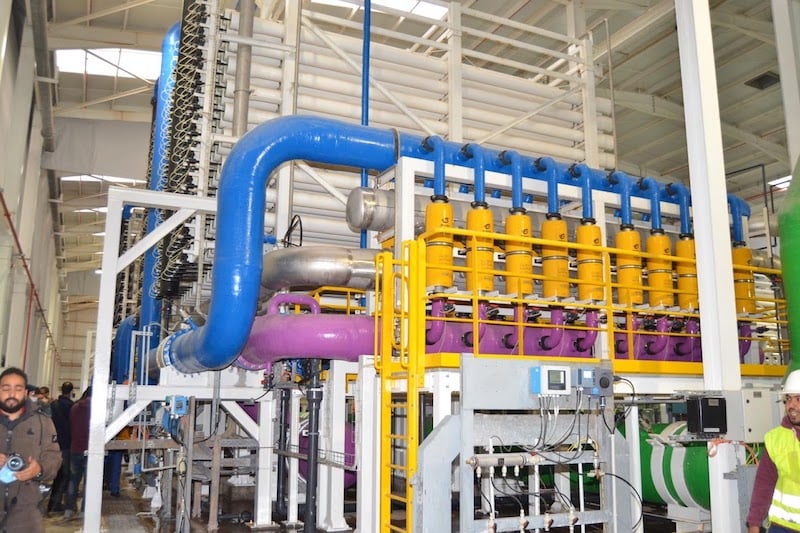
Youssef Brouziyne, regional representative for the Middle East and North Africa at the International Water Management Institute, offered a technical framing of Morocco’s distinctiveness. He was quoted by CNN as saying that the Moroccan model should not be understood through the single lens of large desalination plants, however significant those projects are. What makes it coherent is an underlying ecosystem of enabling conditions: an appropriate legal framework, long-term planning horizons, and institutional governance designed to deliver sustained results rather than point interventions.
Brouziyne added that achieving durable water security requires more than increasing the volume of water produced. It demands building resilience in the face of climate variability, generating more economic value from each cubic meter of water available, and ensuring that access to water is distributed fairly across populations and territories. As climate pressures intensify across the Mediterranean and Sahel regions, Morocco’s combination of infrastructure, policy reform, and institutional capacity is increasingly cited in international forums as a reference for countries navigating comparable challenges.