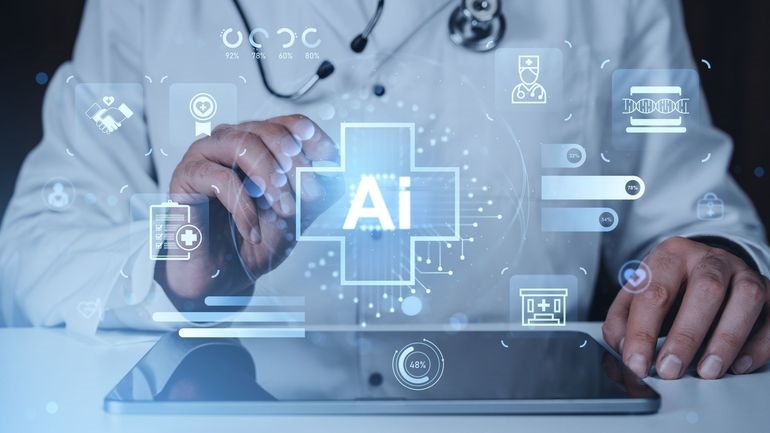
Health and Social Protection Minister Amine Tehraoui told the Chamber of Representatives on Monday that his department has adopted artificial intelligence solutions to strengthen early diagnosis capabilities across Morocco’s health establishments, in what he described as a concrete expression of the ministry’s digital transformation agenda. Two operational deployments are now running in the public health system, with a third national program under development.
The most immediately impactful application targets maternal health in rural areas. The ministry has launched a program to facilitate the performance and interpretation of ultrasounds using AI in rural health centers, designed specifically to support midwives and health workers in areas with limited access to specialist physicians. Pilot implementation is under way at the Aghbala health center in Béni Mellal province and the Moulay Bouazza center in Khénifra province. The program’s primary objective is the early detection of high-risk pregnancies — a category where timely identification is directly correlated with maternal and infant outcomes, and where the absence of specialist ultrasound capacity has historically been most damaging.
At the national level, the Institut National d’Oncologie at Ibn Sina University Hospital Complex in Rabat has deployed an AI-assisted early detection solution for breast cancer. The system is designed to accelerate and improve the precision of diagnosis, optimizing the probability of early-stage identification and thus the chances of successful treatment. Breast cancer is Morocco’s most frequently diagnosed cancer in women, and early detection is the single most effective lever for reducing mortality.
Tehraoui also outlined a third, broader program: a national initiative to progressively unify the information systems of Morocco’s health establishments within an integrated digital network. Significant progress has been made in several regions through the rollout of hospital systems, the integration of primary health centers, and the networking of establishments. The ultimate goal is the unified medical record, enabling the tracking of each patient’s therapeutic pathway across different levels of care and facilitating the deployment of telemedicine services in regions facing specialist shortages.
The three programs collectively represent a deliberate attempt by Morocco’s health system to compress the gap between its ambitions for universal health coverage and the reality of its specialist human capital constraints. AI, in the minister’s framing, is not a substitute for additional doctors and specialists — it is a force multiplier that extends the reach of the skills that exist, particularly into rural and underserved areas.