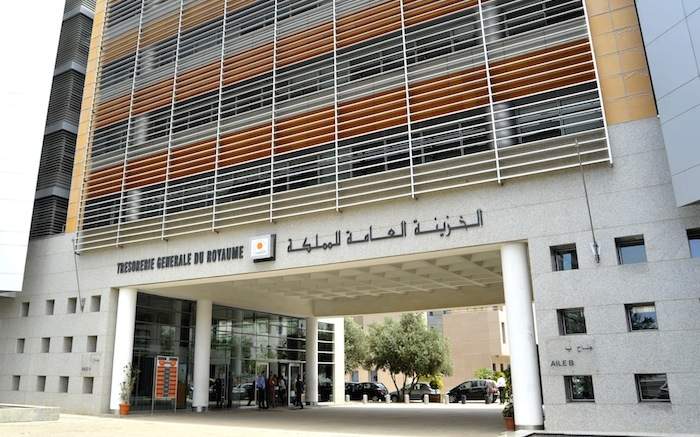
Morocco’s budget execution for the first four months of 2026 reflects a broadly positive economic context, anchored by a bumper agricultural season and resilient non-farm activity, against a backdrop of elevated public spending. The Ministry of Economy and Finance’s April bulletin records a budget deficit of 19.1 billion dirhams at end-April 2026, widening from 17.5 billion dirhams at the same point in 2025, as expenditure growth outpaced revenue growth. Treasury special accounts, however, generated a surplus of 26.5 billion dirhams, up sharply from 14.9 billion dirhams a year earlier.
Total revenues net of tax rebates, exemptions, and restitutions reached 144 billion dirhams, a year-on-year increase of 10.1 billion dirhams (+7.6 percent), representing a 33.3 percent execution rate against the full-year Finance Law forecast. Tax revenues grew by 10.9 billion dirhams (+8.9 percent), with a 36.4 percent execution rate. Corporate tax was the standout performer, rising 9 billion dirhams, driven primarily by strong spontaneous payments — up 8.9 billion dirhams or 22.9 percent — reflecting the first instalment of 2026 corporate tax payments and end-of-year regularizations. The corporate tax execution rate reached 48.1 percent.
Income tax receipts declined by 1.2 billion dirhams (-4.3 percent) relative to end-April 2025, but the comparison is distorted by a one-off 3.8-billion-dirham voluntary tax regularization revenue recorded in January 2025. Stripping out this exceptional item, income tax revenue would have grown 11.1 percent year-on-year, supported by gains in capital gains tax on securities (+1.8 billion dirhams) and salary withholding tax (+679 million dirhams). VAT revenues grew 1.2 billion dirhams (+3.9 percent), driven by import VAT (+1.1 billion dirhams), while VAT refunds rose to 6.6 billion dirhams from 4.8 billion at end-April 2025.
Ordinary expenditure reached 146 billion dirhams, up 14.6 billion dirhams year-on-year, with an execution rate of 38.5 percent. Goods and services spending rose 12.9 billion dirhams (+11.7 percent), of which personnel spending increased 5.6 billion — partly reflecting the social dialogue wage measures — and other operating expenditure grew 7.3 billion, driven by a 6.1 billion increase in equipment spending. Debt service costs rose 2.2 billion dirhams (+15.8 percent). Compensation subsidies fell 468 million dirhams (-6.2 percent), reaching 7.1 billion dirhams with a 51.4 percent execution rate. The combination of revenue and expenditure trends produced a negative ordinary balance of -2 billion dirhams, against a +2.5 billion surplus at end-April 2025.
Capital spending reached 43.6 billion dirhams, up 8.7 billion (+24.9 percent), with a 38 percent execution rate relative to the Finance Law. The Treasury’s financing needs at end-April stood at 20.9 billion dirhams, sharply lower than the 33.3 billion recorded a year earlier. Domestic market mobilizations covered 19.2 billion dirhams, while net external borrowing was negative at -2.5 billion dirhams. The overall picture is of an economy expanding on solid foundations, with public finances under controlled pressure as the state maintains investment momentum and social commitments simultaneously.