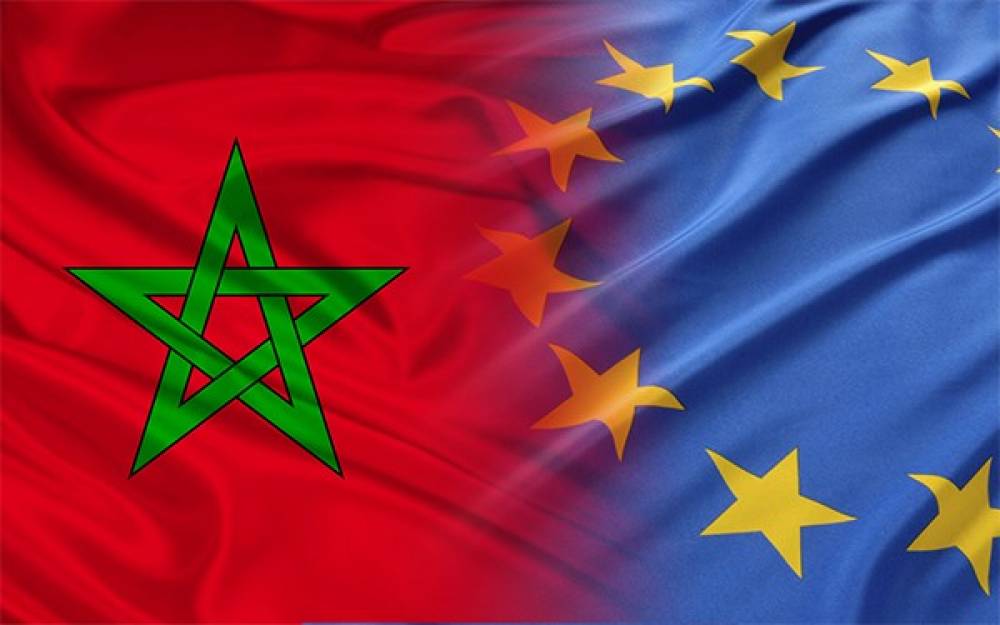
The relationship between Morocco and the European Union is undergoing a significant transformation — moving away from a decade-long period of tension toward a more balanced and strategically mature partnership, explained Doha Lkasmi, Director General of NSI Maroc and a researcher affiliated with Sciences Po Paris’s Center for International Research, in an analysis published by news outlet le360.
The friction that marked recent years stemmed largely from rulings by the Court of Justice of the European Union concerning trade agreements covering the Sahara, as well as critical statements from the European Commission. However, Lkasmi argues that neither Rabat nor Brussels had a genuine interest in allowing those tensions to solidify. Reciprocal diplomatic efforts — Morocco’s more assertive and proactive outreach to EU institutions and member states, and Europe’s growing openness to integrating Morocco’s core national interests — have gradually restored mutual confidence.
A turning point came at the January 2026 Association Council meeting in Brussels, where the EU welcomed UN Security Council Resolution 2797, adopted in October 2025, and acknowledged Morocco’s 2007 autonomy plan as a serious and credible basis for a political settlement. This position is now shared by a growing number of EU member states — including France, Spain, Germany, Italy, Belgium, and Latvia — reflecting a broader international convergence that also includes the United States and Gulf Cooperation Council countries.
Lkasmi describes the current phase as simultaneously one of consolidation and recomposition. The 30-year-old Association Agreement, high-level political dialogue, deep trade ties — the EU remains Morocco’s largest investor and trading partner — and security cooperation all form a solid foundation. But the more significant shift is qualitative: a move toward co-construction of priorities, where Morocco and the EU negotiate on equal footing rather than a top-down Brussels-to-Rabat model.
Looking ahead, Lkasmi identifies three major cooperation axes: regional security and stability, the energy transition — where Morocco’s renewable energy leadership opens doors for major European investment — and scientific and academic exchange, including joint research programs and researcher mobility across both shores of the Mediterranean.