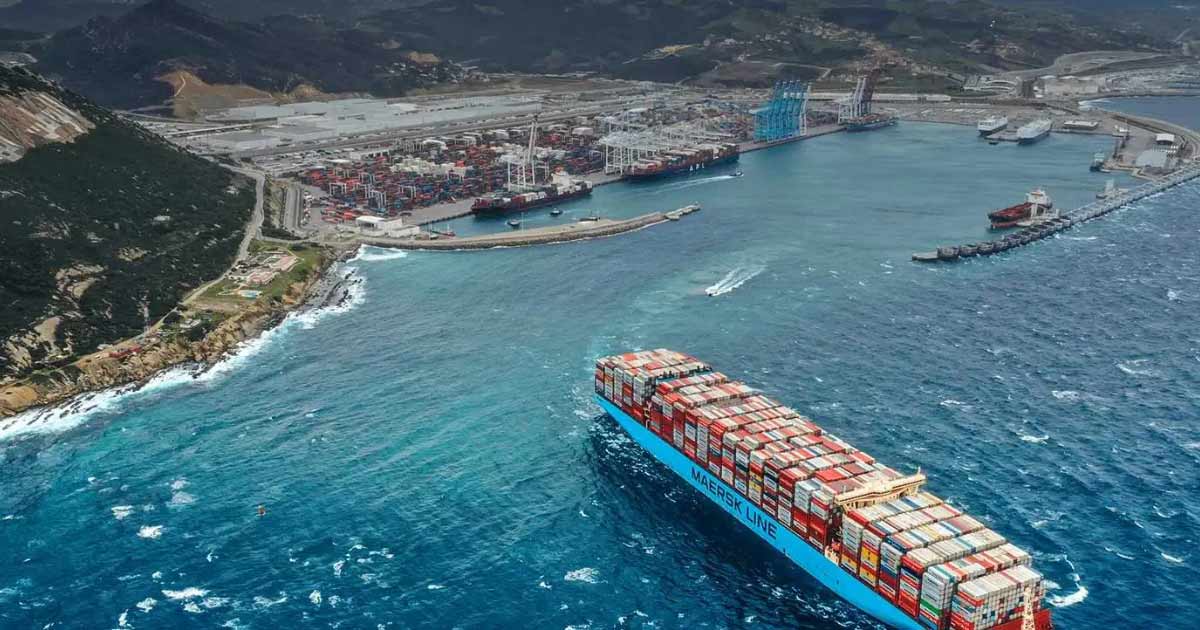
Morocco’s two flagship ports — Tanger Med and Casablanca — have been recognized among the most globally connected maritime hubs in the Arab world, according to the fourth sectoral report on Arab maritime transport published by the Arab Investment and Export Credit Guarantee Corporation (Dhaman) for 2025.
The report ranks both ports alongside regional heavyweights including Jebel Ali, Khalifa, Jeddah, Alexandria, Port Said, Dammam, Damiette, and Salalah — in a connectivity assessment covering 71 Arab ports. At the country level, Morocco leads the Arab Maritime Transport Connectivity Index, ahead of the UAE, Egypt, and Saudi Arabia, reflecting the Kingdom’s strategic positioning at the intersection of Atlantic and Mediterranean shipping lanes.
Arab maritime trade is expanding on multiple fronts. The Arab commercial fleet grew 4% in 2025 to approximately 2,900 vessels, with cargo capacity rising 4.6% to nearly 109 million deadweight tons — roughly 5% of global maritime transport volume. Arab ports collectively handled over 423 million metric tons of cargo in 2023, with Morocco, the UAE, Saudi Arabia, and Egypt accounting for 58% of that total. Container throughput across ten major Arab ports rose 19% between 2019 and 2023, reaching approximately 59 million TEUs.
In terms of cross-border investment, the Arab maritime sector attracted 146 foreign investment projects over the past 23 years, totaling around $4 billion. Six Arab countries — including Morocco — jointly participated in 11 intra-Arab maritime investment projects worth more than $218 million combined.
Morocco’s leadership in regional connectivity rankings is no coincidence. Tanger Med alone processed a record 161 million tons of cargo in 2025, cementing its status as Africa’s premier container port and a critical node in global supply chains connecting Europe, Africa, and the Americas.