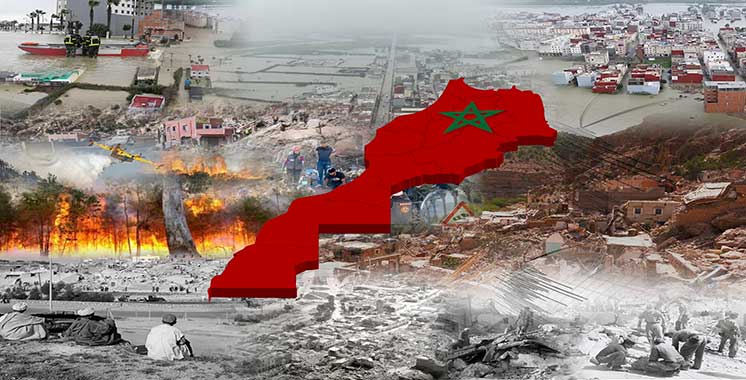
From earthquakes to flash floods and forest fires, Morocco is accelerating the integration of risk assessment into its national infrastructure planning as climate pressures and geological vulnerabilities demand a fundamental shift from reactive disaster management to strategic anticipation.
The September 2023 Al Haouz earthquake, which measured nearly 6.8 in magnitude and claimed approximately 3,000 lives, served as a watershed moment. It exposed the fragility of rural construction in mountainous regions and triggered a national reassessment of seismic building codes. The extensive reconstruction program that followed has become a real-world laboratory for deploying more resilient construction techniques adapted to local terrain.
Flooding remains the country’s most recurrent natural threat. The Gharb and Loukkos plains, particularly around Ksar El Kebir, face recurring inundation during intense rainfall. Climate research points to a troubling trend: precipitation is concentrating into shorter, more violent episodes, increasing the likelihood of rapid flooding and overwhelming urban drainage systems. Meanwhile, wildfire risk is quietly escalating in northern forest regions as prolonged heat waves and structural drought extend fire-prone seasons.
Morocco’s response has evolved significantly. Risk management is no longer confined to emergency response — it now shapes the design of dams, highways, railways, industrial zones, and major port and airport projects from the outset. The country’s ambitious dam-building program serves dual purposes: addressing chronic water scarcity while regulating flood flows across vulnerable basins.
As Morocco prepares for the 2030 FIFA World Cup and pursues unprecedented infrastructure investment, territorial resilience has become a measure of national credibility. The challenge ahead is clear: transform the country’s genuine geographic vulnerability into a competitive advantage through superior preparation, advanced hazard mapping, and infrastructure built to withstand an increasingly volatile natural environment.