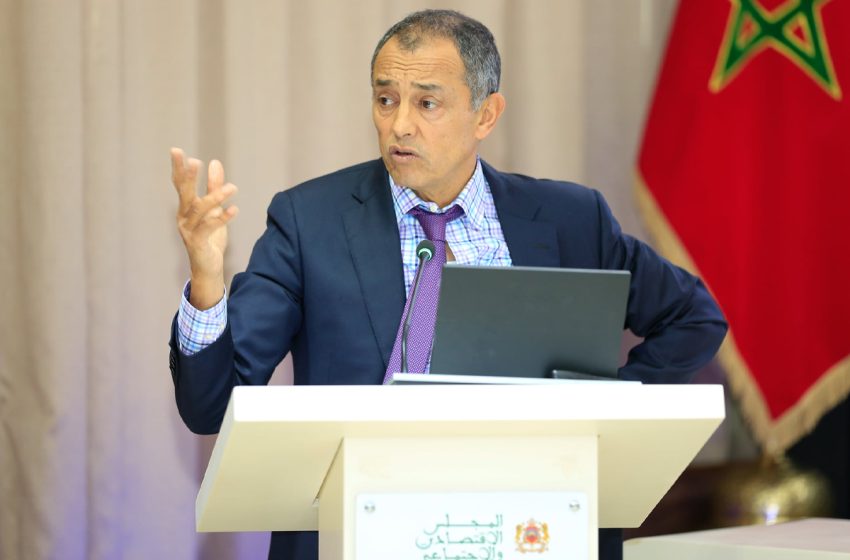
Water and Infrastructure Minister Nizar Baraka provided comprehensive flood management details Wednesday following weeks of intense precipitation that delivered 12.17 billion cubic meters of water inflows since September—triple the previous year’s volume. National dam filling rates reached 69.4%, representing approximately two years of drinking water supply, while meteorological services forecast additional precipitation in the Loukkos region with 40-60mm expected Friday before conditions improve Sunday.
Cumulative rainfall since September averaged 150mm, up 35% from 1990s averages and exceeding typical annual levels. Snowfall covered maximum 55,495 square kilometers, with current coverage at 23,186 square kilometers maintaining depths between one and two meters. Since December 12, water inflows totaled 11.7 billion cubic meters within under two months—surpassing the past seven years’ average and exceeding certain complete years’ totals.
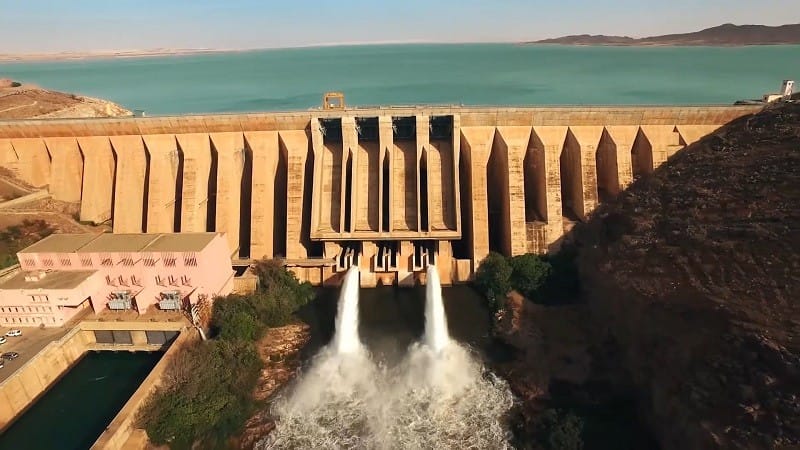
Dam management centered on Oued El Makhazine, which received 1.462 billion cubic meters cumulatively, including 1.031 billion over fifteen days. Single-day inflows reached 135 million cubic meters, with 900 million recorded over five days. Peak incoming flow hit 3,200 cubic meters per second January 28, with maximum outflow reaching 810 cubic meters per second contributing to downstream flooding. Initial forecasts projected 6,200 cubic meters per second, though actual peaks stabilized at 2,200 before settling to 1,200 for 24 hours.
Management employed preventive releases preserving safety margins, permanent monitoring with hourly level tracking, and hydrological simulations anticipating precipitation impacts. Soil absorption saturation reached 98%, with water traveling from Chefchaouen to Larache in six to nine hours. Al Wahda Dam received 3.48 billion cubic meters against 3.5 billion capacity, with releases progressively increased from 200 to 2,200 cubic meters per second before adjusting to 1,300 and scheduled reduction to 800 Friday.
Road infrastructure damage affected 168 sections—124 reopened, 44 remain closed—concentrated in Tanger-Tetouan-Al Hoceima, Rabat-Sale-Kenitra, Fes-Meknes, Marrakech-Safi, Souss-Massa, Casablanca-Settat, Beni Mellal-Khenifra, and Oriental regions. Operations mobilized 390 vehicles and 572 personnel including engineers, technicians, and equipment operators. Baraka emphasized flood management plans include updating inundation zone atlases integrating climate change evolution and developing advanced hydraulic simulation modeling.