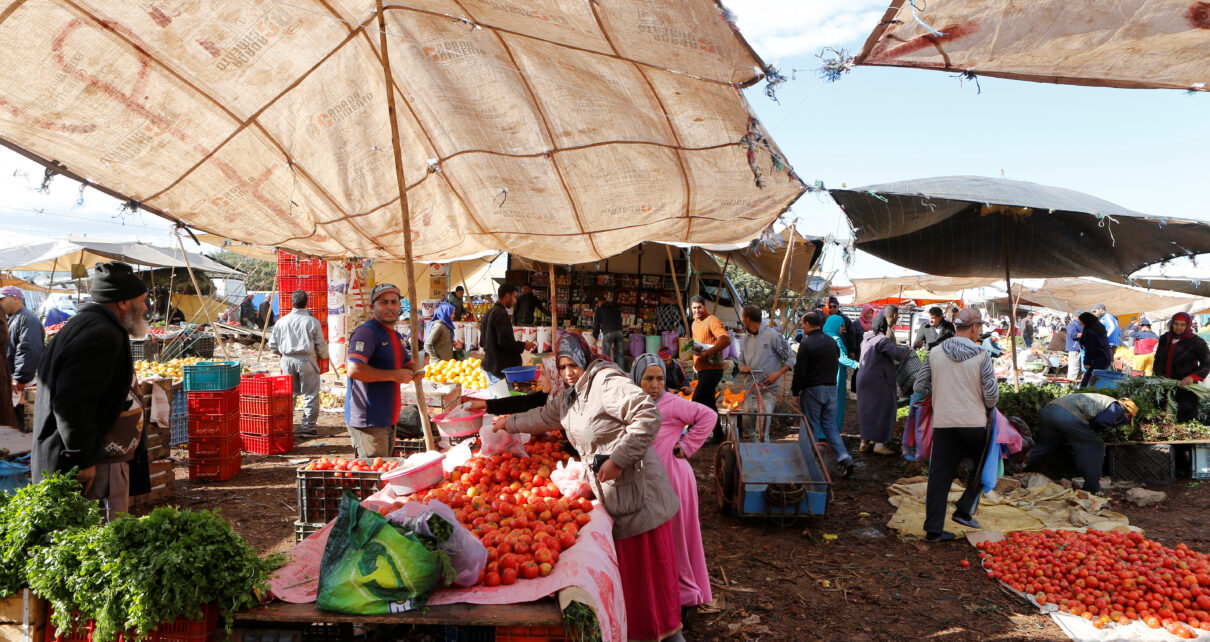
The High Commission for Planning reports that inflation continued its downward trajectory for the third consecutive quarter, reaching -0.1% in the fourth quarter of 2025, compared to 2% at year’s beginning. This reversal resulted from a 0.7% contraction in food prices combined with a 0.4% increase in non-food products.
The sharp food inflation retreat was driven by significant olive oil price decreases, facilitated by an abundant national harvest, alongside falling meat prices. This trend was further supported by declining import prices for cereals and dry legumes, following improved supply conditions on global markets. However, these trends were partially offset by persistent price pressures on fresh produce and coffee.
Simultaneously, continued energy price declines, though at a more moderate pace than the previous quarter at -1.1% after -3%, contributed to containing non-food product price evolution, reflecting falling international oil prices.
Core inflation, which excludes prices subject to state intervention and volatile products, followed a similar but more pronounced trajectory than overall inflation, standing at -0.7% after +0.7% the previous quarter, notably due to reduced tensions in its food component.
The sustained disinflationary trend reflects multiple factors converging to ease price pressures across the Moroccan economy. The substantial olive oil harvest provided relief for households facing elevated cooking oil costs throughout the prior year, while improved global commodity markets benefited import-dependent segments.
Energy cost moderation, driven by international petroleum market dynamics, filtered through to transportation and production costs, indirectly supporting broader price stability across non-food categories. The negative inflation figure represents a notable shift from the elevated price growth experienced in 2023 and early 2024, when global supply disruptions and domestic factors combined to generate significant cost-of-living pressures.
This favorable inflation environment provides Moroccan monetary authorities with greater flexibility in managing economic policy while supporting household purchasing power recovery. However, pockets of price pressure in fresh products and imported commodities like coffee indicate that localized inflationary forces persist despite the overall downward trend in price growth.