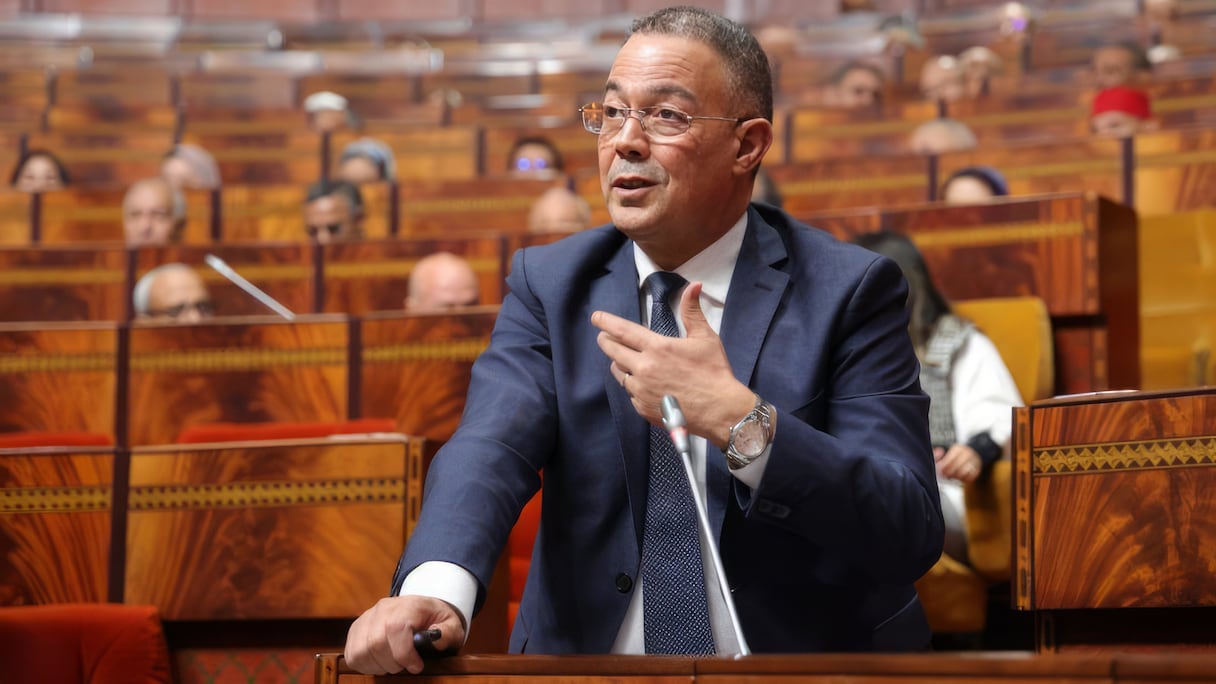
Morocco’s government has prioritized public investment performance and its tangible impact on economic growth, job creation, and territorial equity, according to Budget Minister Fouzi Lekjaa. This orientation aligns with royal directives calling for transition from quantitative to qualitative approaches in public investment management.
Speaking at the parliament question time, Lekjaa emphasized that sectoral studies demonstrate public investment’s significant contribution to strengthening basic infrastructure including roads, ports, airports, and water and electricity networks. These achievements have enhanced territory attractiveness for private investment while facilitating direct and indirect job creation, particularly in industrial, energy, tourism, and agricultural sectors.
Territorial dimensions integrate into public investment evaluation through spatial distribution monitoring, aiming to guarantee improved equity between regions, particularly less-favored areas. Several institutional and technical mechanisms have been established to assess public investment impact related to implementation of the Investment Charter.
The Finance Ministry is developing new evaluation approaches founded on economic and social profitability analysis before project programming. This methodology involves adopting performance indicators linked to growth, employment, environmental impact, and territorial equity. It integrates performance criteria into budget allocation through contracts with public establishments and enterprises, linking financing to results achievement while strengthening posterior evaluation through periodic reports on major project execution and territorial development impact.
Public investment credits increased from 90 billion dirhams in 2007 to 340 billion dirhams in 2025, projected to reach 380 billion dirhams in 2026. This envelope distributes across 179.7 billion dirhams for public establishments and enterprises, 132.8 billion dirhams for general budget and special treasury accounts, 45 billion dirhams for the Mohammed VI Investment Fund, and 22.5 billion dirhams benefiting territorial communities.
These efforts have enabled notable advances in major infrastructure projects and sectoral strategy implementation while improving basic service access and contributing to reduced social and territorial disparities. The objective shifts from public spending logic to productive investment ensuring optimal utilization of state financial resources.