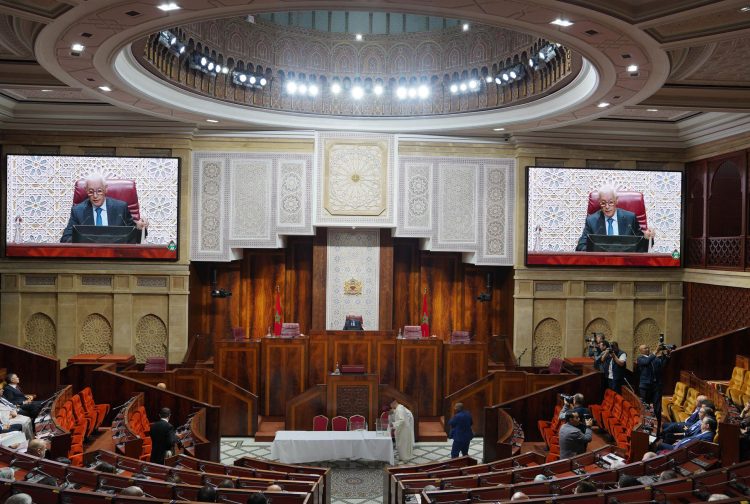
Morocco’s Chamber of Representatives approved the 2026 Finance Bill Friday during a plenary session, and sent the draft budget to the Chamber of Councillors for further legislative review. The lower house passed the bill with 165 deputies voting in favor and 55 against, with no abstentions recorded.
The Finance and Economic Development Committee received 350 amendments during the review process—328 for the first part and 22 for the second. Only 30 amendments to the first section received approval, with nearly all others rejected. Amendments originated from government sources (2), majority groups (23), Socialist-Opposition Ittihadie Group (73), Popular Movement Group (46), Progress and Socialism Group (37), Justice and Development Parliamentary Group (117), and deputy Fatima Tamni (30).
Economy and Finance Minister Nadia Fettah emphasized during general discussions that the bill’s context reflects a new phase in national economic dynamics. “The debate no longer focuses on resilience or crisis mitigation but on achieving sustainable growth and diversifying wealth sources within a prosperous Moroccan economy advancing according to long-term strategic vision,” she stated.
Fettah insisted the bill achieves precise balance between numerical logic and integrated development challenges, serving as both financial and developmental framework reflecting government’s comprehensive vision for implementing strategic choices and applying New Development Model recommendations.
Morocco has achieved remarkable success preserving macroeconomic balances and strengthening financial sovereignty through fiscal reforms, spending rationalization and improved resource mobilization, enabling debt reduction and enhanced international institution confidence, she noted. “These indicators naturally attract more international investors.”
Majority groups emphasized the bill consecrates economic vision founded on competitiveness and sustainability, while opposition criticized what they termed absence of “reformist courage” capable of producing innovative solutions. The draft budget allocates nearly 380 billion dirhams in public investment to accelerate structural projects and sectoral strategies, creating nearly 37,000 new public sector positions.
The Chamber of Councillors, including representatives from political parties, unions and business organizations, will now examine the bill before final passage, potentially introducing additional modifications reflecting broader stakeholder perspectives.