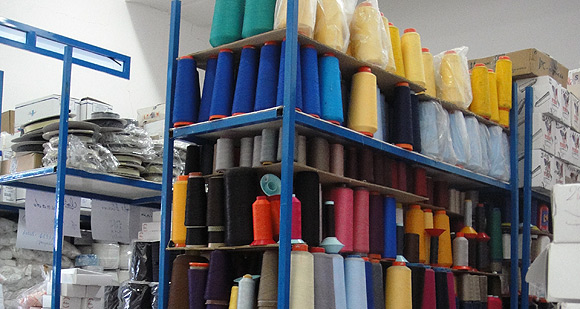
Morocco’s textile and clothing sector demonstrates measured resilience amid intensifying global competition, maintaining its eighth position among EU sourcing destinations with 7% growth in 2025. However, structural challenges reveal the urgent need for strategic transformation toward higher value-added production.
Latest data from Eurostat and Morocco’s Foreign Exchange Office show the kingdom’s textile exports to the EU reached €881.7 million by April 2025, though this growth significantly trails Asian competitors. China leads with €7.88 billion (+24%), followed by Bangladesh at €7.54 billion (+25%), while emerging players like Cambodia surge 45% since 2023.
Morocco’s heavy dependence on Spain remains evident, with exports reaching €526.1 million in April 2025 (+13%), representing over half of total EU exports. Traditional markets show concerning declines: France (-4%), Benelux (-17%), and Italy (-14%), while Germany (+24%) and Portugal (+27%) provide bright spots.
The sector faces product-specific challenges, with labor-intensive items like t-shirts (+2%) and dresses (+3%) outperforming struggling segments including trousers (-11%) and pullovers (-17%). This disparity reflects partial market adaptation amid persistent structural weaknesses.
A significant development emerged from the June 18 meeting between Morocco’s textile association AMITH and Hugo Boss CEO in Metzingen. The German luxury brand expressed clear intentions to strengthen its industrial presence in Morocco, seeking partners capable of meeting “high standards of quality, traceability, and performance.”
The Morocco-Turkey trade relationship remains problematic, with Morocco’s deficit approaching $3 billion. Recent measures include 90% customs duties on certain Turkish textile products and ongoing negotiations to revise the 2006 Free Trade Agreement, aiming to achieve more balanced commercial exchanges targeting $5 billion in bilateral trade.
Industry experts emphasize that Morocco’s textile future depends on successful value-added transformation, market diversification, and integration into demanding global supply chains, moving beyond cost-based competition toward quality-driven competitiveness.