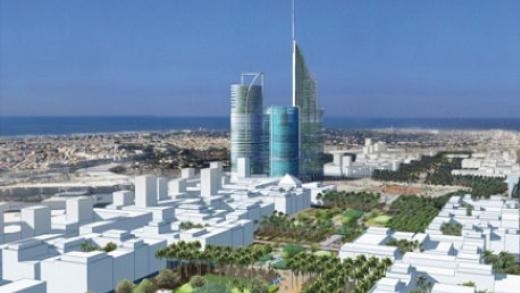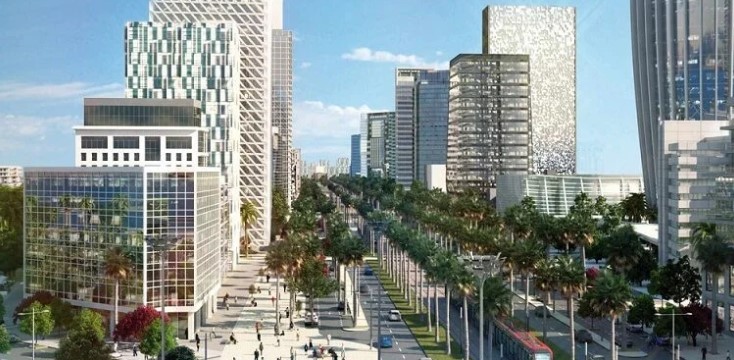
The Casablanca Finance City impressive growth and its rapidly mushrooming new high-rise buildings stand as a model for African development and a gateway for international investment into Africa, said the Guardian daily.
The attractive tax regime of Morocco’s financial center has brought in entities from across the globe. It now hosts 240 companies, including Huawei and Schneider Electric, accounting for more than 7,000 jobs.
“We welcome companies from multiple sectors … [and] we also support them in their development into the continent,” said Lamia Merzouki, CFC chief operating officer.
Over the past decade, Moroccan investment across Africa has sharply risen: from $100m in 2014 to $2.8bn in 2024. As of March 2025, the Casablanca financial hub ranked fourth in the Middle East and Africa region and 56th out of 119 overall on the Global Financial Centers Index.
Brigitte Labou, the head of customs practice for Francophone Africa at KPMG Avocats, based in Paris, says hubs such as the CFC are “important levers for accelerating the industrialization of Africa.
“The financial hub that the CFC represents, as well as the related tax advantages, are assets that can attract the relocation of production chains to Morocco and Africa,” she added.
Representing a key entry point for business into Africa, the CFC is seen by the Moroccan government as a valuable component of the African Continental Free Trade Area (AfCFTA), a unified African market of 1.4 billion people. In a time of global tariff wars, Africans are hoping AfCFTA can help.
Merzouki agrees, stressing the need to speed up the momentum and enhance regional integration to counter shared challenges. “Even if there are lots of different trade wars and economic upheavals, Morocco remains a stable platform”, offering investors political stability and macroeconomic stability, said Merzouki.
Morocco and CFC now marketing the profile of stability and haven within chaos to draw in more entities amid one of the biggest global trade disruptions in decades.