In a detailed analysis, the Hudson Institute urged the US administration to designate the Polisario as a terrorist group, citing the militias’ involvement in destabilizing acts in the region, in connivance with its main sponsor Algeria, as well as Iran, which has been using the separatist group to gain a foothold in North Africa.
The Polisario has been described as a “primary source of regional instability,” in the analysis by North Africa specialist, Zineb Riboua, who said time was up for the US administration to act against the armed militia.
After highlighting the strategic shift in 2020, when the Trump Administration recognized Morocco’s sovereignty over the Sahara, Riboua urged a clear cut US engagement in favor of Morocco, a major non-NNTO ally, by designating the Polisario as a terror group.
She made the case for such a designation citing the Polisario’s targeting of civilians, its violations of the 1991 UN ceasefire agreement, its ties to Iran and proxies like Hezbollah, its cooperation with other armed groups with a cold-war era mindset like the PKK, and its destabilizing acts against Morocco, a US ally.
Riboua also noted how the population held against their will in the Tindouf camps have become pawns used by Algeria to serve its separatist chimera in the region, noting that the Sahrawis in the camps are denied the right to citizenship and free movement.
The camps are “militarized enclaves” and not “refugee heavens,” she noted, recalling a Human Rights Watch report that detailed abhorrent rights violations including slavery.
The perpetuation of the conflict by Algeria, which prevents progress towards the autonomy plan, has made the camps a tinder box waiting to explode and a magnet for terrorist groups in the Sahel.
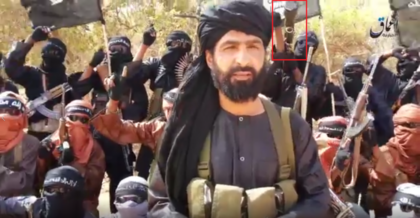
A former Polisario member Adnan Abu Walid al-Sahrawi became the emir of the Islamic State in the Greater Sahara. Under his orders the group carried out numerous attacks across the Sahel, including a 2017 ambush in Niger that killed four US soldiers.
His case shows the dangers that emanate from the status quo that Algeria is so attached to.
Riboua argued that from a US legal point of view, the Polisario engages in terrorist activity as defined under 8 U.S.C. § 1182. This includes attacks in violation of ceasefire agreements, violence against civilians, and logistical and operational coordination with FTOs like Hezbollah.
She called for the US to use its influence to pressure Algeria to disarm the Polisario or else risk classifying the separatist group as terrorist.
“Polisario-linked militant networks fuel instability across the Sahel, threatening US personnel, undermining regional governments, and disrupting access to uranium, gold, and rare earths deposits that are vital to global supply chains. Amid this turbulence, Morocco remains a steadfast US partner—neutralizing terror cells, training regional forces, and serving as a gateway for constructive Western engagement,” she said.