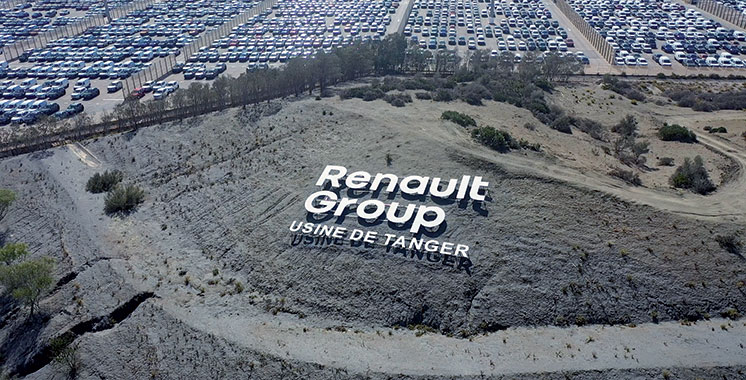
Renault Group will maintain its present and future investments in Morocco, whatever the outcome of the European Union’s draft Industrial Accelerator Act (IAA), according to Mohamed Bachiri, managing director of Renault Group Morocco. In an interview with Médias24, he said the commitments made to the Kingdom stand and that the IAA will not be the only criterion for future investment decisions.
Parliament and Council are due to adopt their own versions by mid-December, with triparty talks in early 2027. Bachiri stressed that the IAA does not ban Moroccan-built cars from the European market and leaves customs rules untouched. It steers support schemes, such as CO₂ super-credits, company fleets, subsidies and public procurement, toward vehicles meeting Made in Europe criteria.
Renault’s preferred outcome is partner-country status for Morocco, which has had an association agreement with the EU since 2000 and advanced status since 2008. Without it, Bachiri acknowledged, there would be a problem to solve.
The stakes are considerable. More than 80% of vehicles made by Morocco’s auto sector go to the EU. Renault’s Moroccan plants built nearly 400,000 vehicles in 2025, close to one in six sold by the group worldwide. Local integration stands at 67.5% and parts purchases at €2.5 billion, about half of them for Renault’s European plants. The group has planned no revision of its 2030 commitments: 7,500 jobs, 80% local integration and €3 billion in sourcing.
Bachiri also addressed the European Commission’s new safeguard measures on hybrid vehicle imports, extended to all exporting countries, including Morocco, whose two carmakers both export hybrids. Chinese hybrid exports to Europe rose 49%, to over 1.4 million units between July 2025 and June 2026. The measures are separate from the IAA, and it is too early to discuss appeals, he said.